
A hot-applied material that sets hard as it cools
Thermoplastic is a solid marking material that is heated until it melts, then laid onto the surface while hot. As it cools, it sets hard within minutes, leaving a thick, tough line.
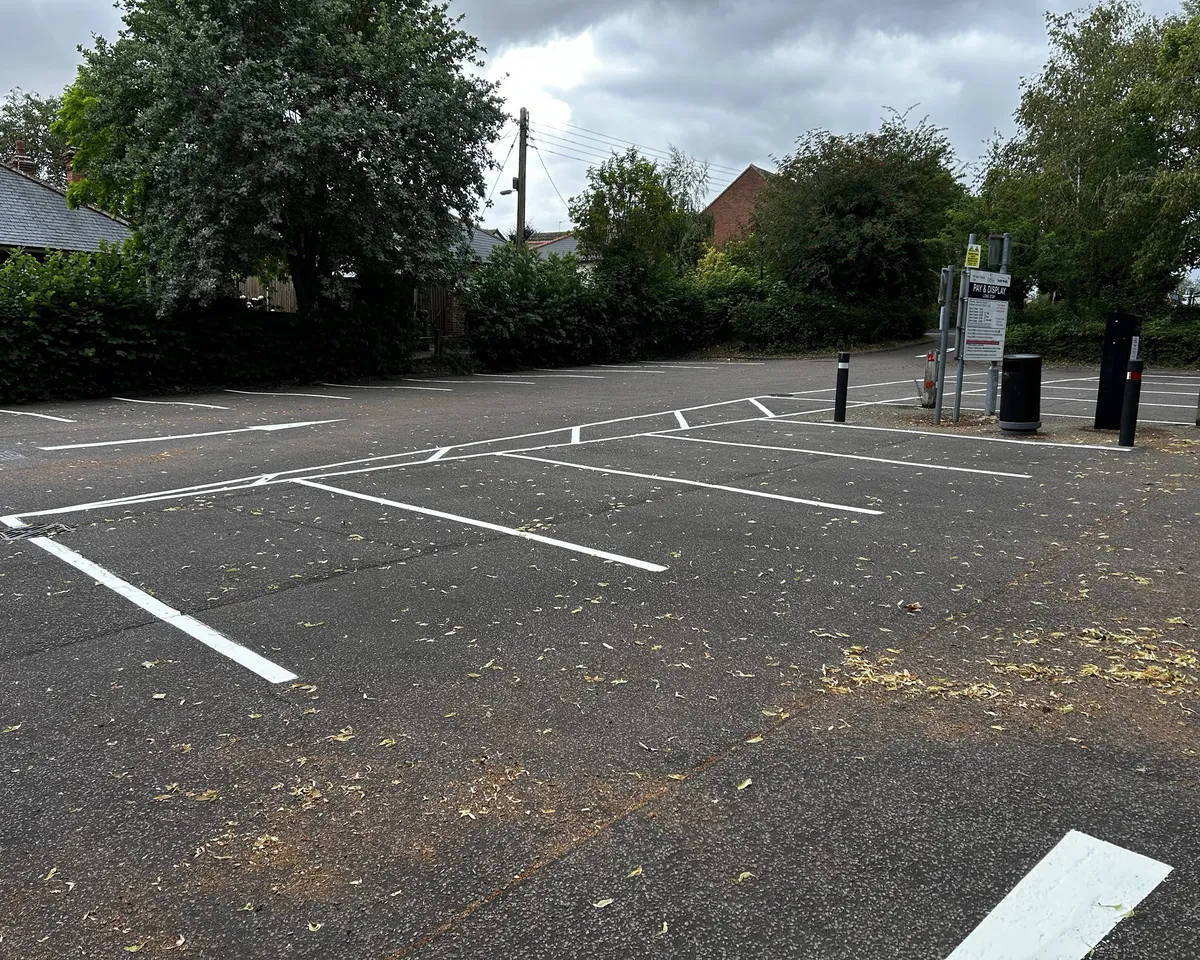
Because it goes down much thicker than paint, thermoplastic lasts far longer on tarmac and gives a slightly raised, clearly visible line. Glass beads are usually mixed in or dropped on top so it reflects headlights at night.
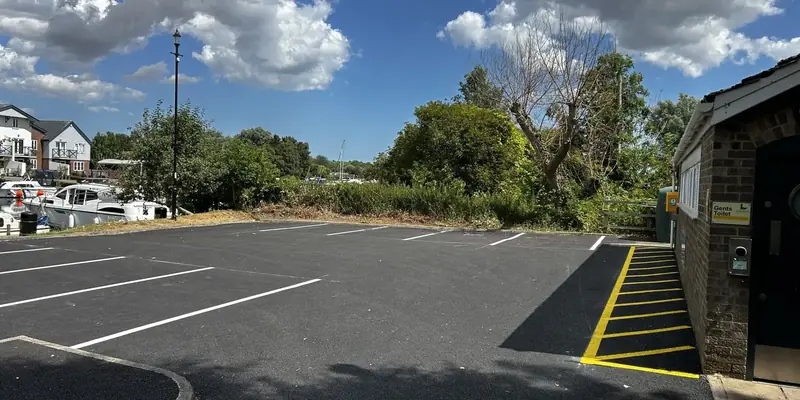
How thermoplastic is applied
- Melting: the material is heated in a boiler until it is fully liquid.
- Laying: it is laid by hand with a screed box or hand mould for lines, letters, arrows and symbols.
- Beading: glass beads are dropped onto the hot surface for night-time visibility.
- Setting: it sets as it cools, so the area can usually be opened again within minutes.
Like any marking, it only lasts if it bonds to a clean, dry, sound surface. See why surface preparation matters.
Preformed thermoplastic graphics
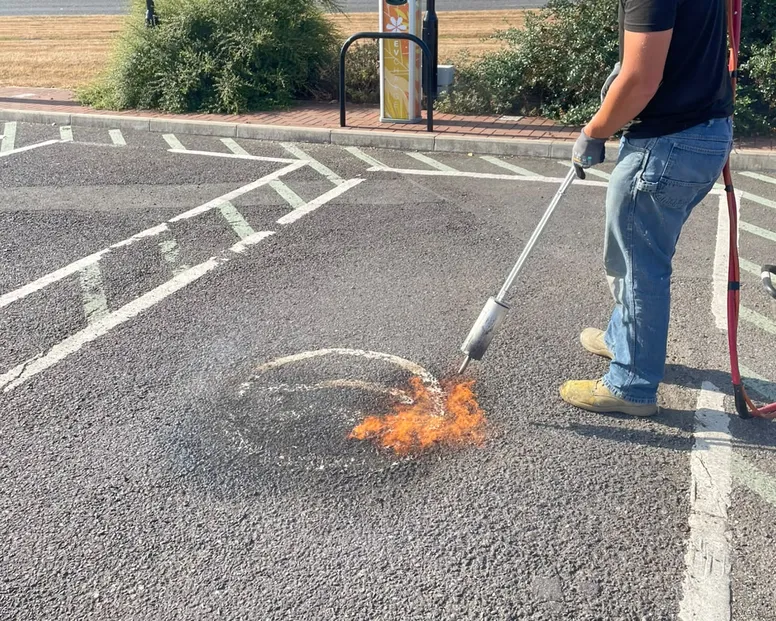
Preformed thermoplastic comes as ready-made shapes, letters and graphics. They are laid in place and heated with a gas torch until they melt and bond to the surface.
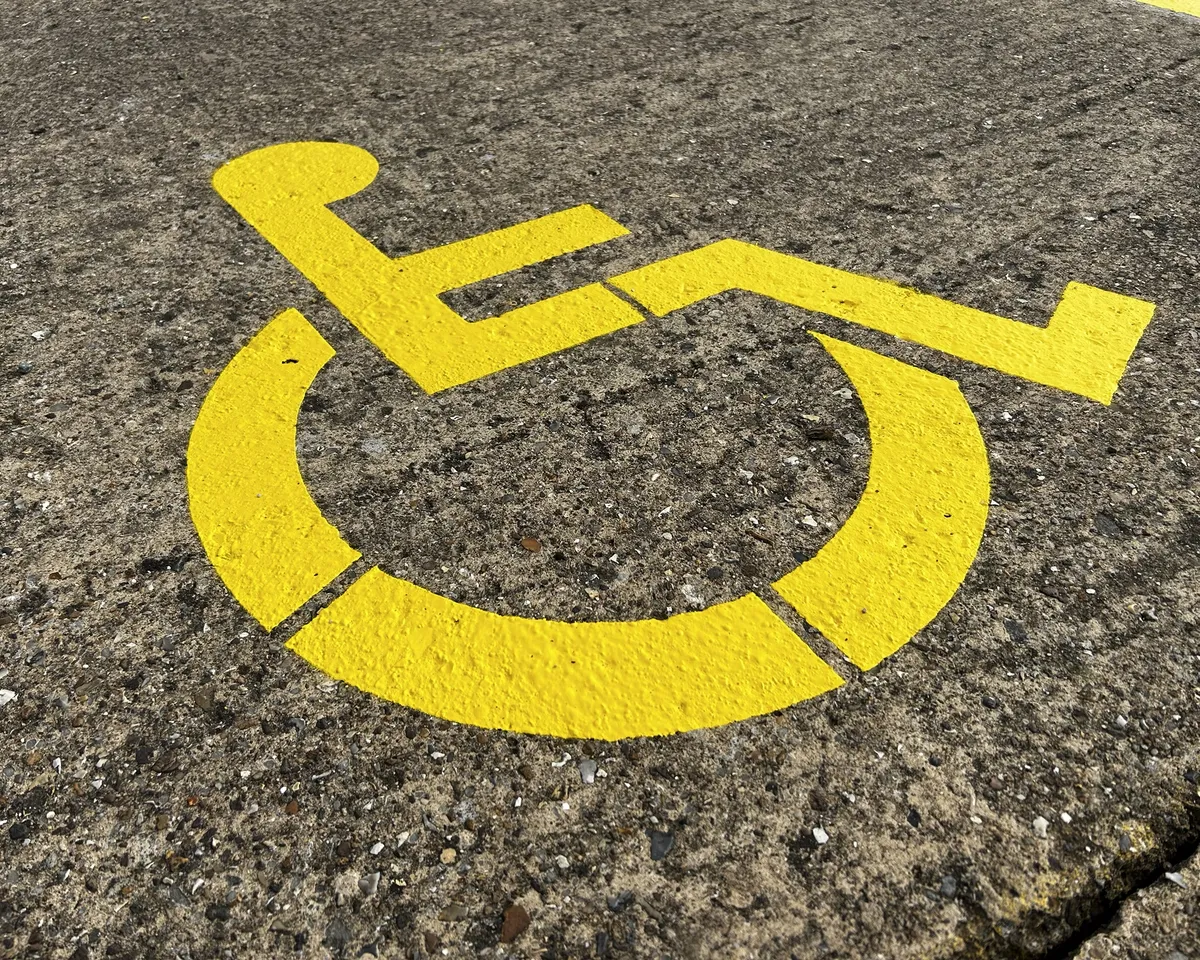
This is how most school playground games are done, such as hopscotch, number grids and running tracks, and it is also used for logos, symbols and disabled bay graphics. See our school playground markings.
What thermoplastic does well, and its limits
- Long life on tarmac: much longer than paint on a well-used car park.
- Quick to reopen: it sets in minutes as it cools.
- Bonds best to old thermoplastic: it is the natural choice for relining sites that already have thermoplastic markings.
- Less suited to concrete: it grips tarmac best. On concrete and indoor floors we use other systems.
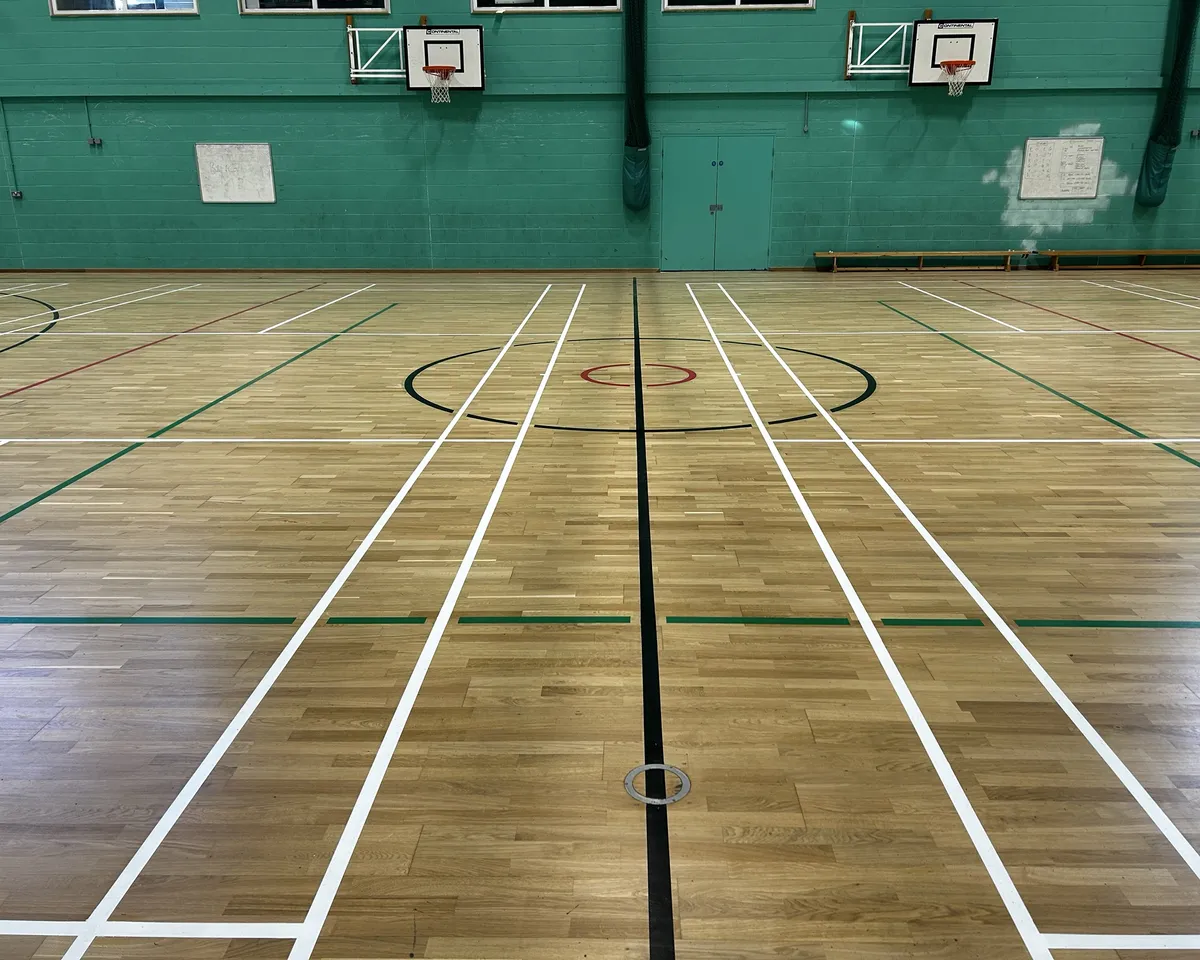
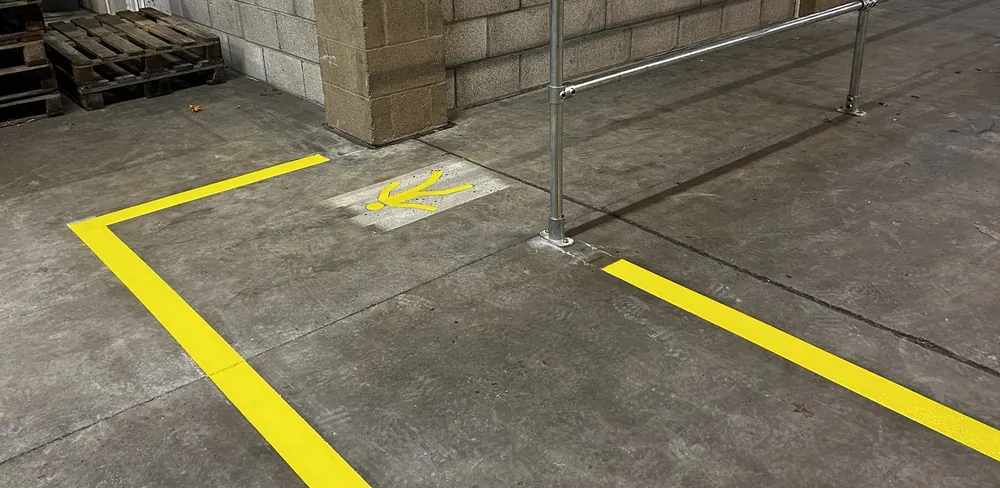
- Not for indoor floors: warehouse floors need coatings such as epoxy or polyaspartic instead.
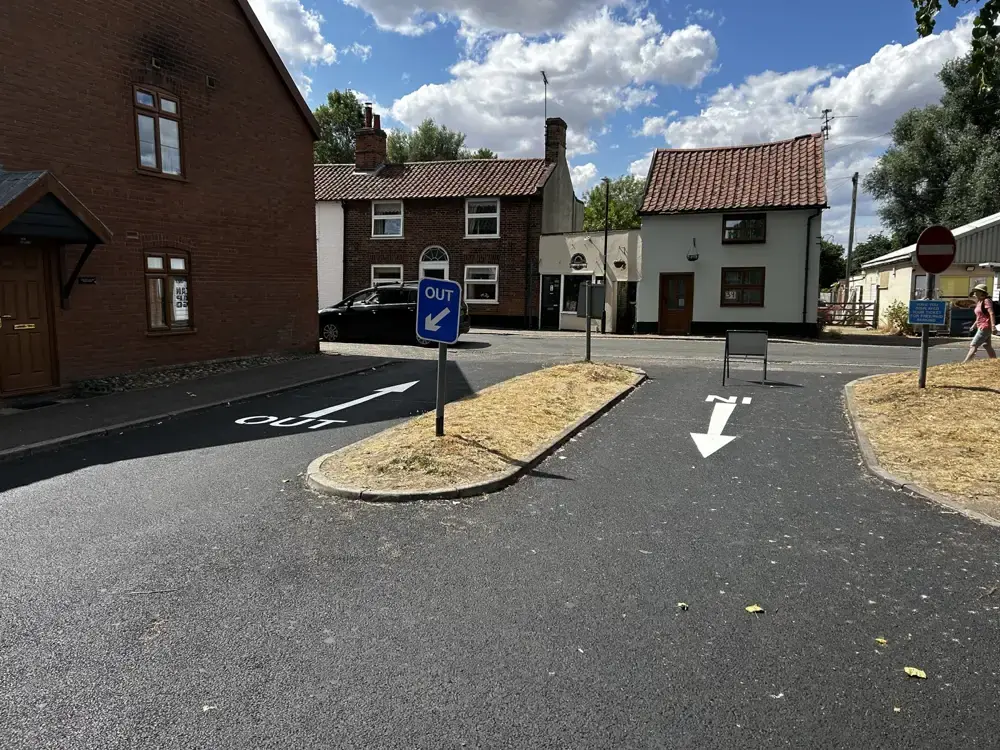
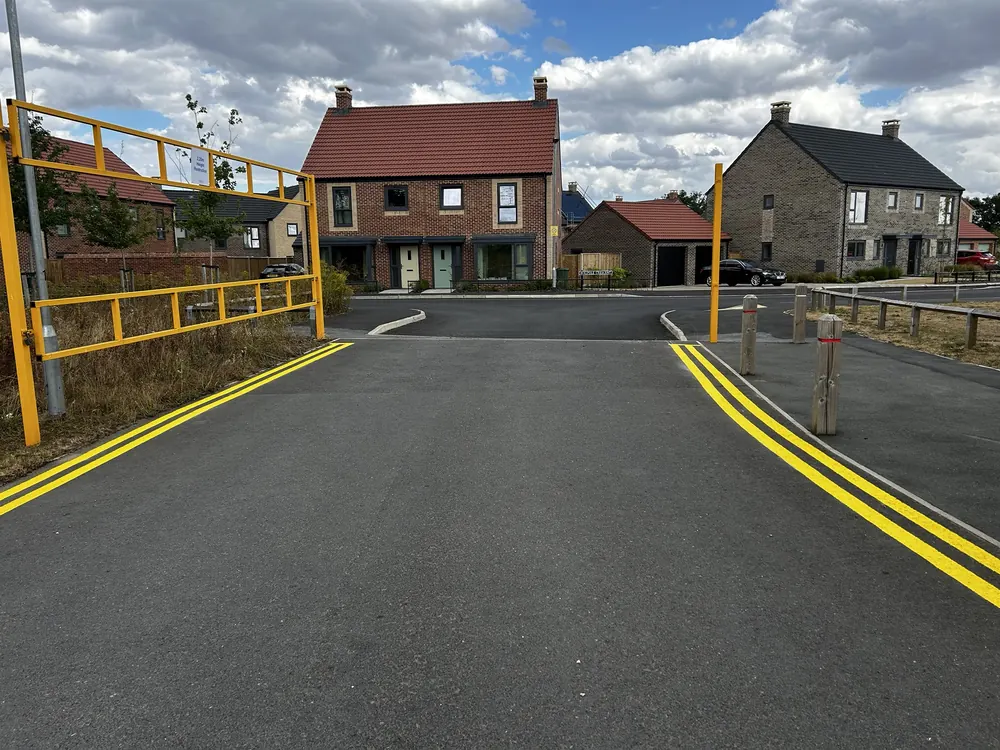
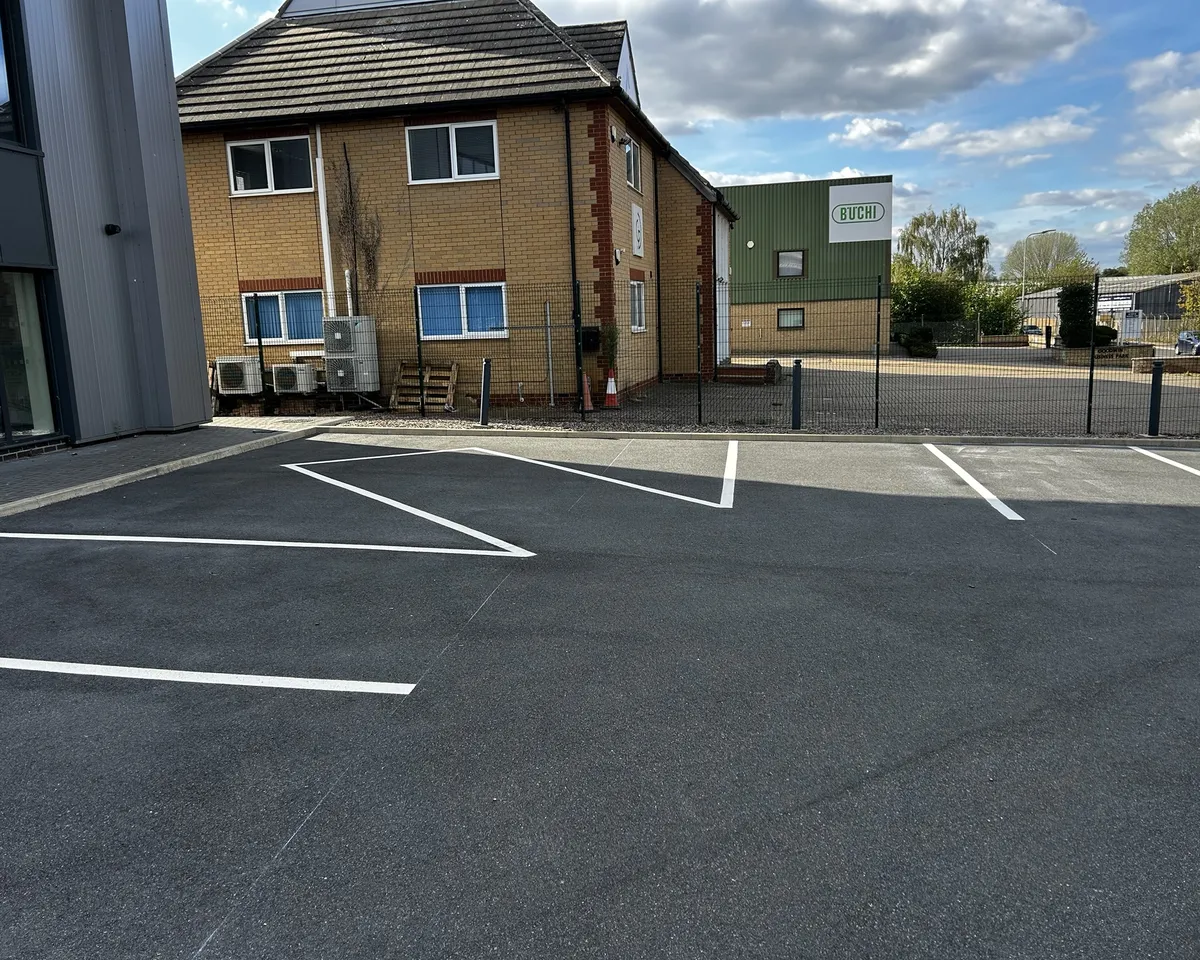
Thermoplastic, MMA or paint?
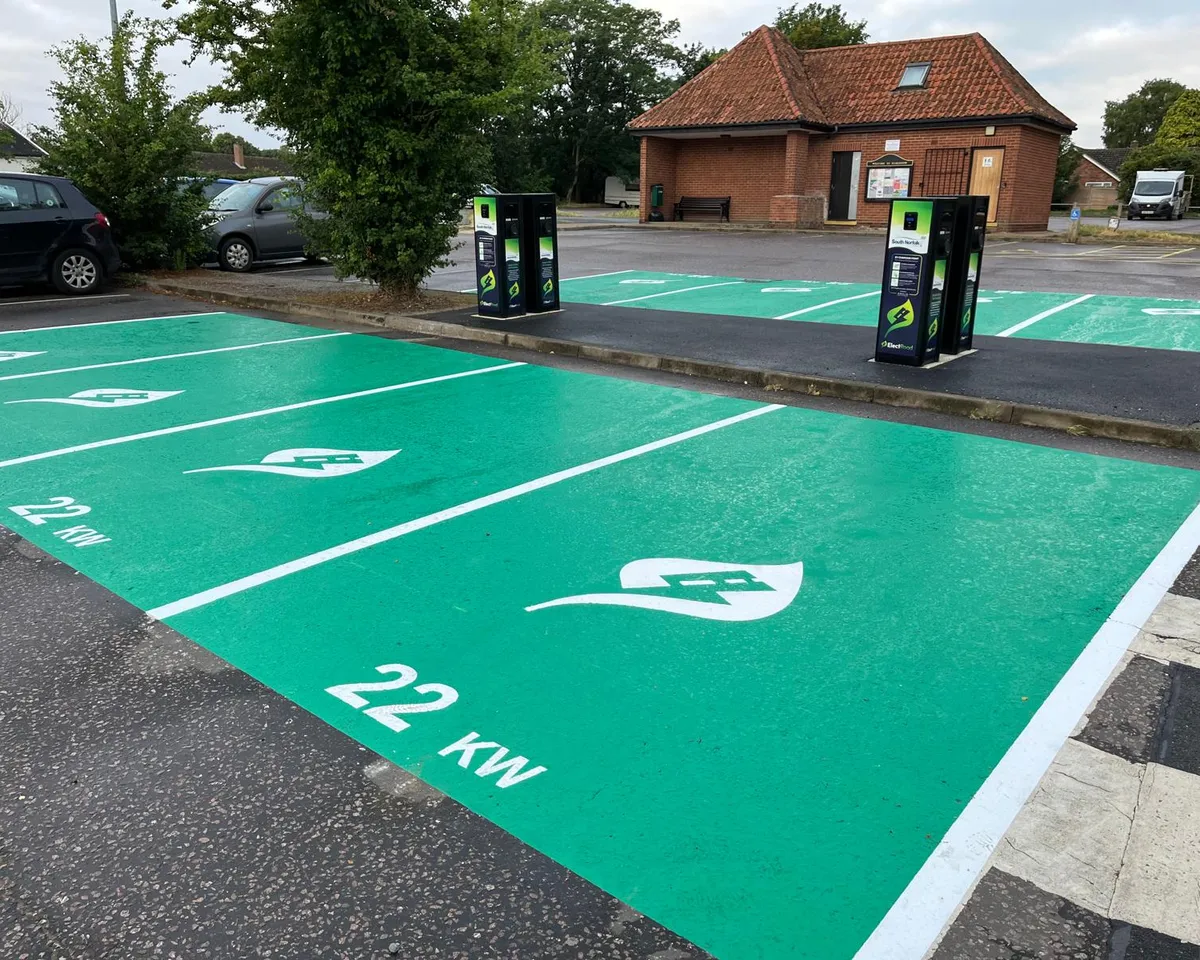
For most outdoor car parks, the choice is between thermoplastic, MMA and spray-applied paint. Thermoplastic suits tarmac car parks and relines over existing thermoplastic. MMA suits coloured bays, EV bays and heavy traffic. Paint is the budget option and is quick to apply.
See which line marking material to choose and what MMA line marking is.
Wondering if thermoplastic is right for your site?
Tell us about your site and we'll be in touch.
Prefer to chat to a member of the team?01603 905 022Frequently asked questions
How long does thermoplastic line marking last?
On a well-prepared tarmac car park, thermoplastic usually lasts several years, and much longer than paint. Heavy traffic and turning vehicles wear it faster.
How long before I can drive on thermoplastic?
It sets as it cools, so the area can usually be opened again within minutes of the last line going down.
Can thermoplastic go over old lines?
It bonds well to old thermoplastic that is still sound. Old paint and failing coatings should be removed first.
Is thermoplastic the same as MMA?
No. Thermoplastic is laid hot and sets as it cools. MMA is laid cold and sets by chemical reaction.
Can thermoplastic be used indoors?
Not usually. For warehouse and factory floors we use floor coatings such as epoxy or polyaspartic.