
Markings are only as good as the surface underneath
Most line markings that fail early don't fail because of the paint. They fail because of what the paint was put on.
A marking bonds to whatever is directly underneath it. If that is dirt, moisture, oil or an old layer of failing paint, the new marking is bonded to that, not to the surface. When that layer lets go, the new marking goes with it.
That's why we start every job by looking properly at the surface, and why we do as much preparation as each site allows.
Want to know why we prepare every surface properly before marking? Read our principles.
Why markings fail early
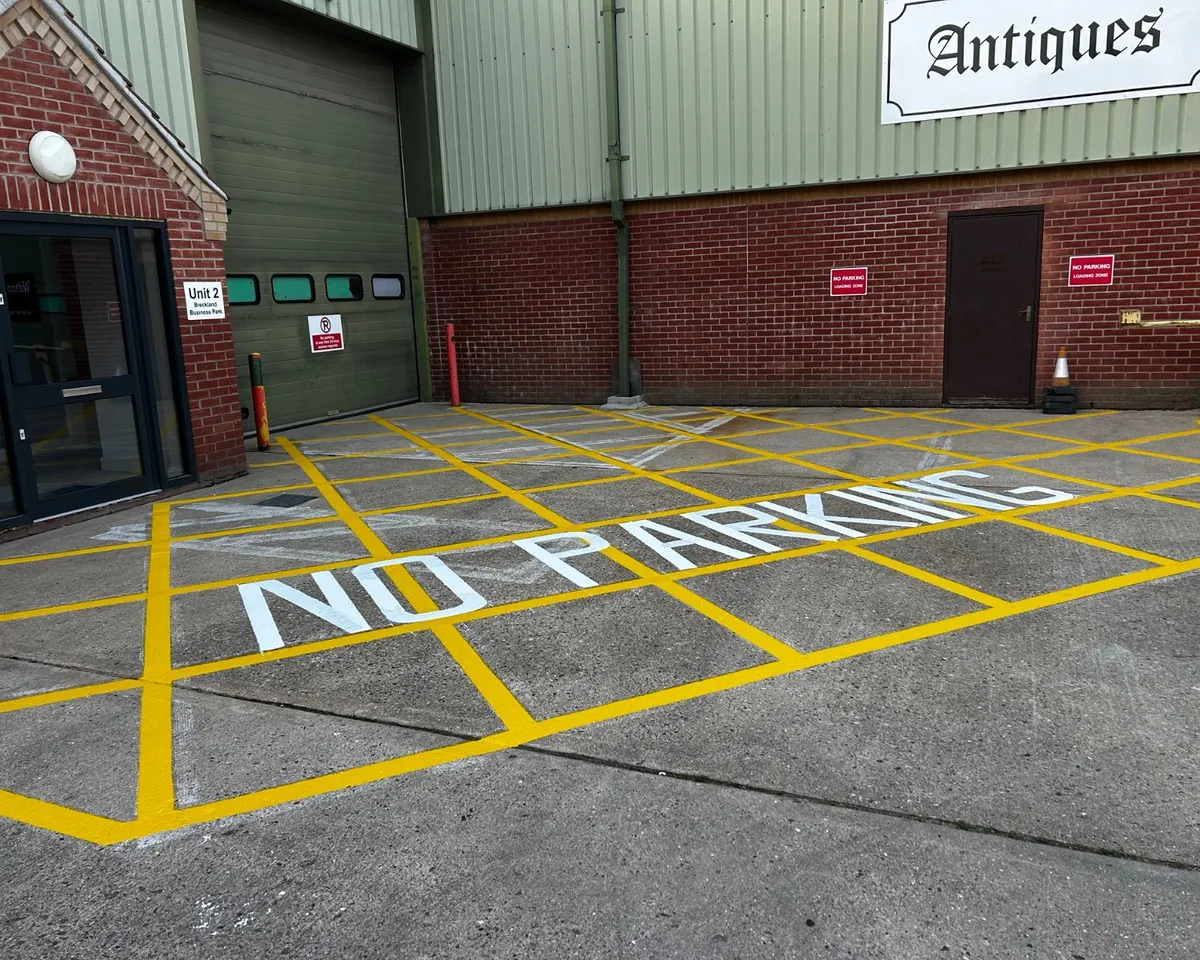
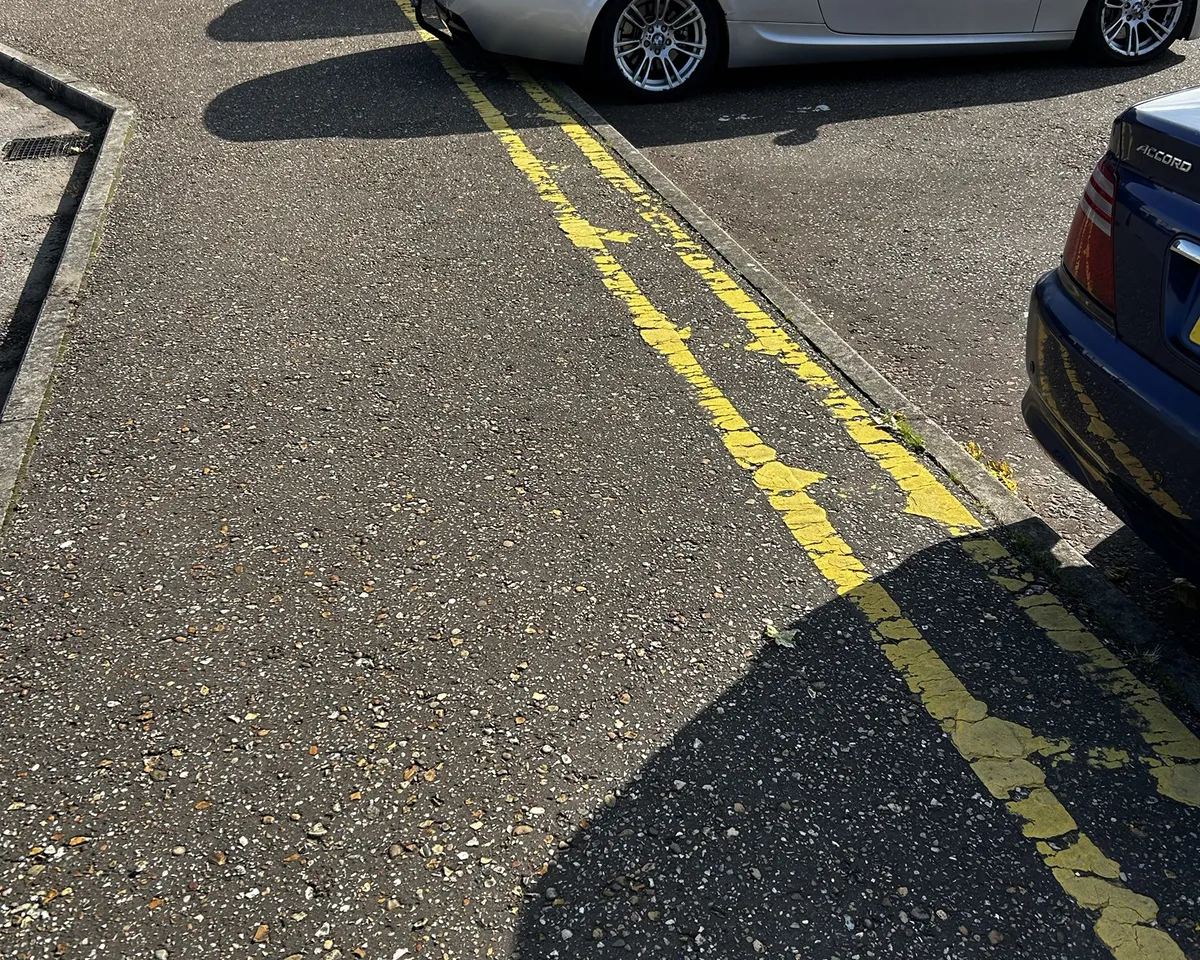
- Painting over old lines: the new paint bonds to the old layer. When the old layer peels, so does the new one.
- Dirt and grit: a thin layer of dust is enough to stop paint bonding properly.
- Moisture: paint applied to a damp surface can blister and lift.
- Oil and rubber: common in car parks and warehouses, and they repel paint.
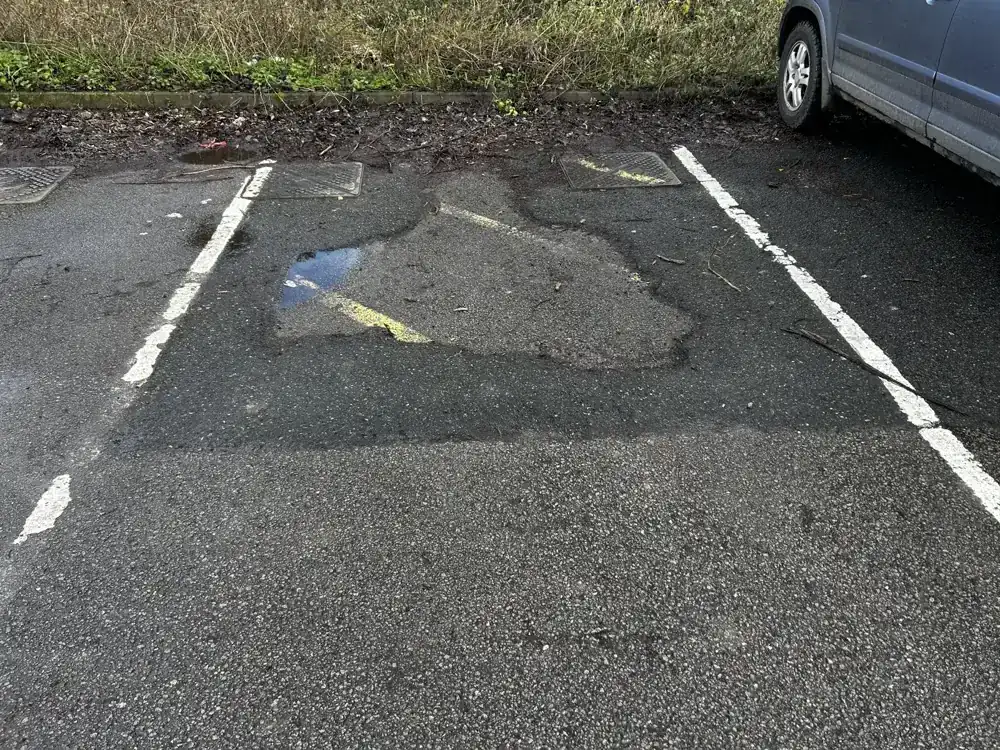
- A failing surface: potholes and crumbling tarmac take the markings with them.
How we prepare outdoor surfaces
- Cleaning: sweeping, and jet washing where needed, to remove dirt and debris.
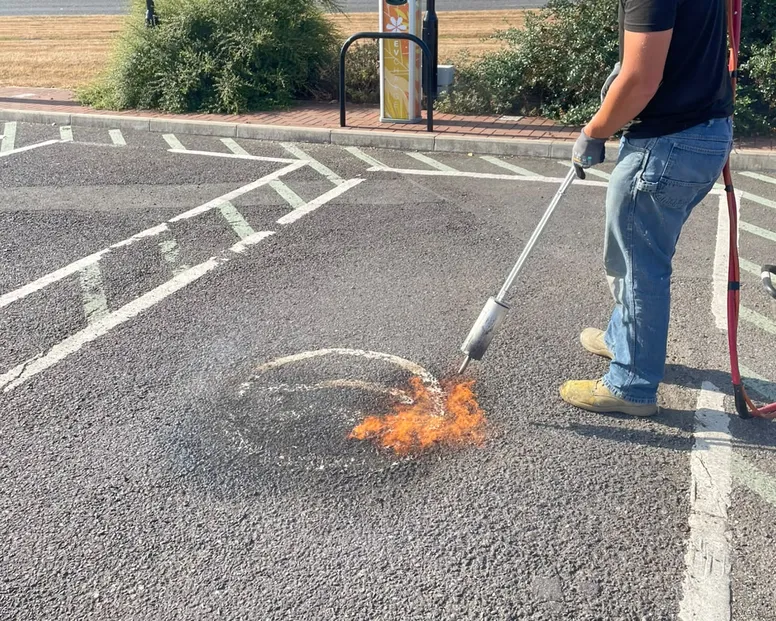
- Drying: where safe to do so, we use a gas burner or drying equipment to remove surface moisture.
- Removing failing lines: burning off old markings, or mechanically grinding, planing or scabbling them back with dust extraction.
- Keying: lightly abrading the surface so the new material has something to grip.
- Priming: concrete and some older surfaces get a primer for a stronger bond.
How we prepare indoor floors
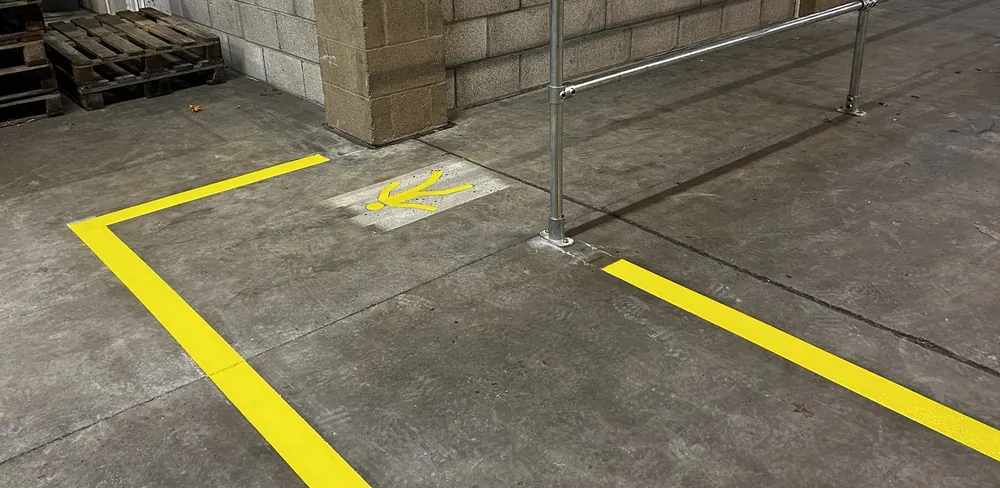
Warehouse and industrial floors need even more care, as coatings on smooth concrete are easily lifted by forklifts and pallet trucks.
- Grinding or shot blasting: removes old coatings, oil and contaminants and exposes fresh, keyed concrete.
- Dust control: industrial dust extraction keeps the site clean and safe.
- Priming: a primer coat seals the concrete and helps the marking system bond.
Where we can, we prepare only the band the line will sit in, so the rest of the floor is left untouched.
More detail in what is shot blasting and why warehouse floor markings peel.
When the surface needs more than preparation
Sometimes the surface itself is the problem. Potholes, standing water and tarmac that breaks up when the old lines are ground back are signs that a reline on its own won't last.
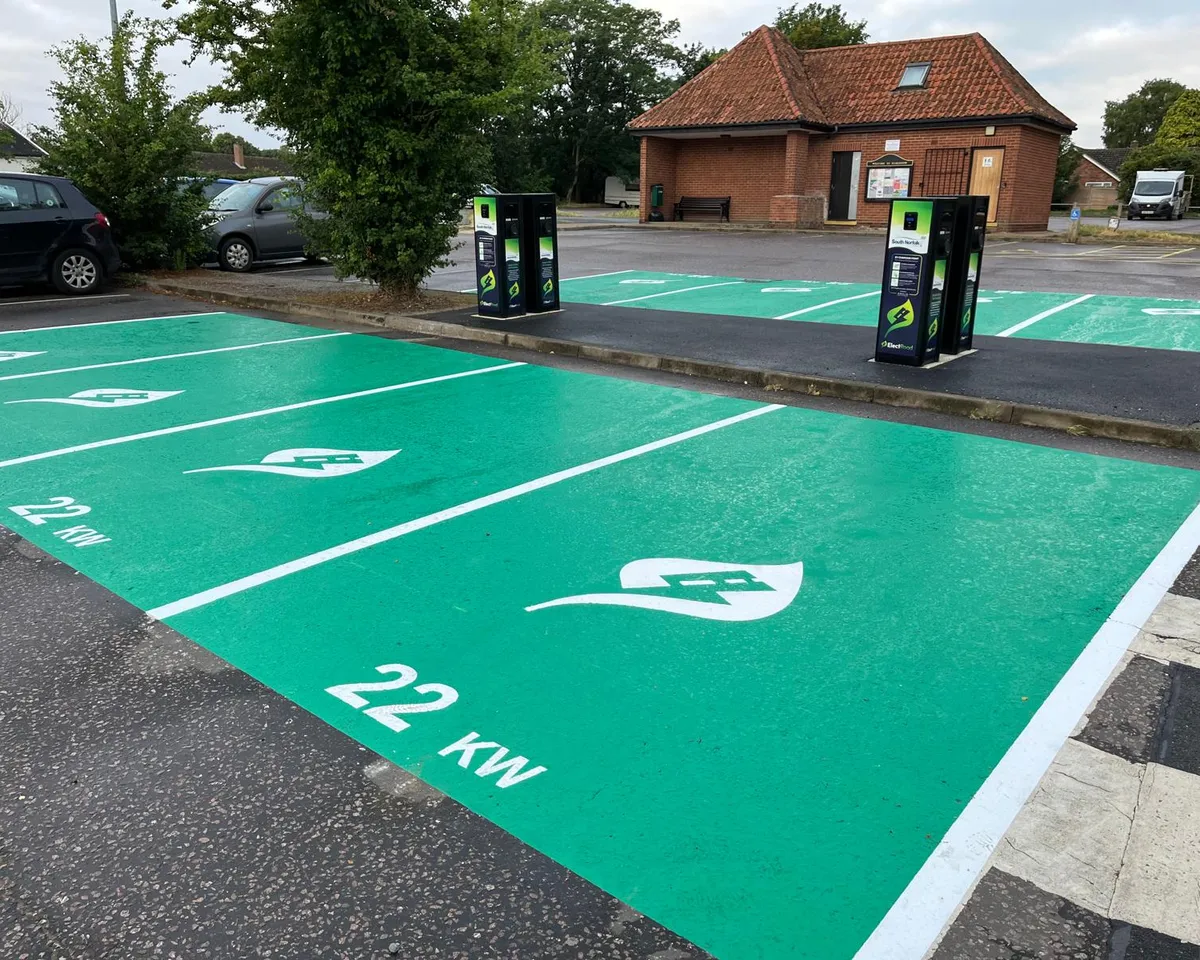
In those cases we'll tell you honestly, and we can manage the resurfacing through our trusted surfacing partner before marking the new layout. See how we did this on a council car park in Loddon.
Is preparation worth the extra cost?
Proper preparation adds a little to the cost of a job. A reline that fails within a year means paying for the whole job again. In our experience, preparation is the cheapest way to make markings last.
When you compare quotes, it is worth asking each contractor:
- How will you prepare the surface?
- What will you do about the old lines?
- Will you prime concrete?
- What material are you using, and why?
If the answer is "we'll just paint over it", expect to be calling someone again soon. See our line removal service, or get in touch for a free estimate.
Want markings that last?
Tell us about your site and we'll be in touch.
Prefer to chat to a member of the team?01603 905 022Frequently asked questions
Can you just paint over the old lines?
We don't recommend it. New paint over failing paint bonds to the old layer, so when that lifts, the new paint goes with it.
Does preparation damage the surface?
Done properly, no. We take off only what is needed to remove failing material and give the new marking a key.
Does it create a lot of dust?
We use industrial dust extraction on mechanical preparation, so very little dust becomes airborne, and the area is vacuumed afterwards.
Does every job need heavy preparation?
No. Some surfaces just need a good clean. We look at every site and do as much preparation as it needs and the budget allows.