
The short answer
Every material we use will do a good job. The real difference between them is how long they last, how quickly they cure and what surface they suit.
There is one rule that matters more than any material: a marking is only as durable as its bond to the surface. The toughest material in the world will peel if it goes down on dirt, moisture or old failing paint. That is why preparation comes first on every job we do.
Here are the main options, and when each one makes sense.
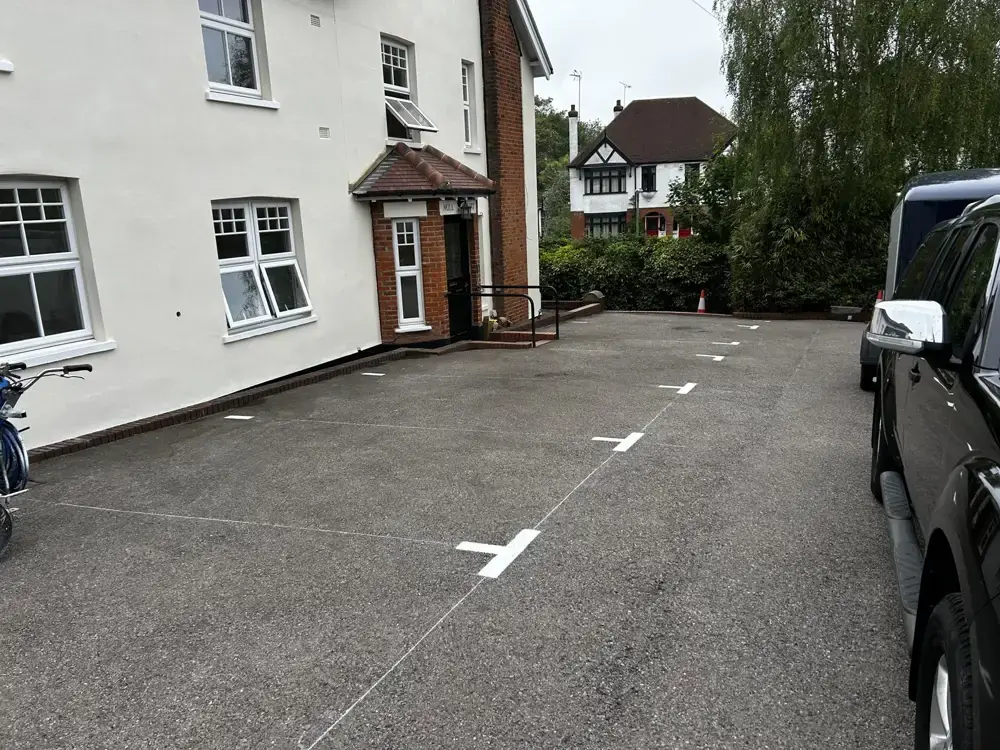
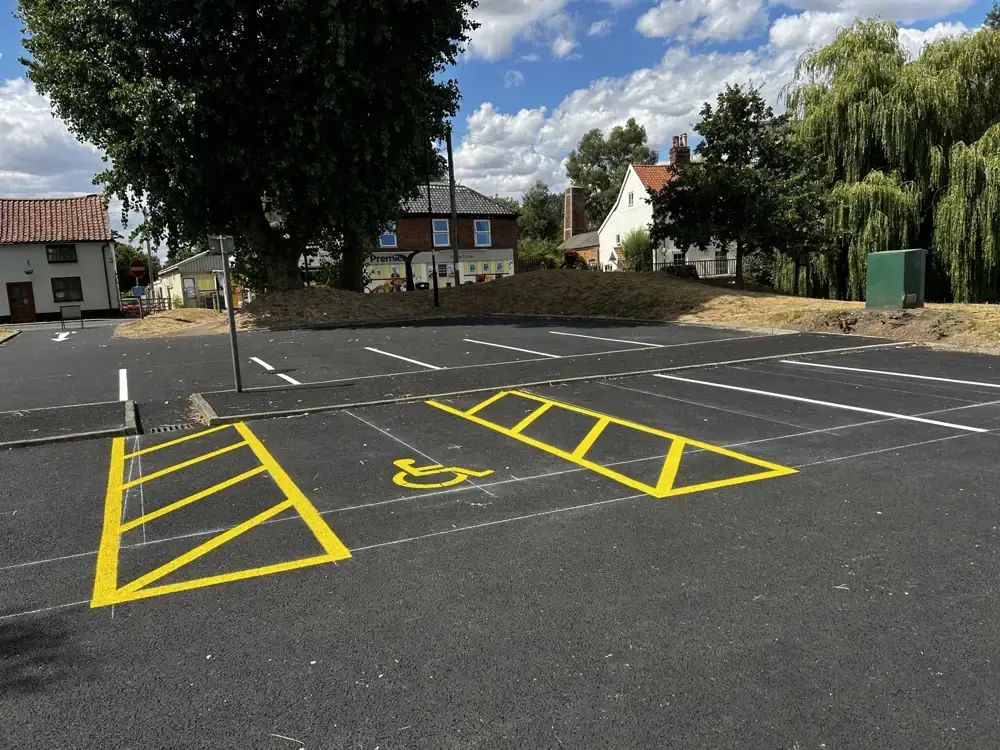
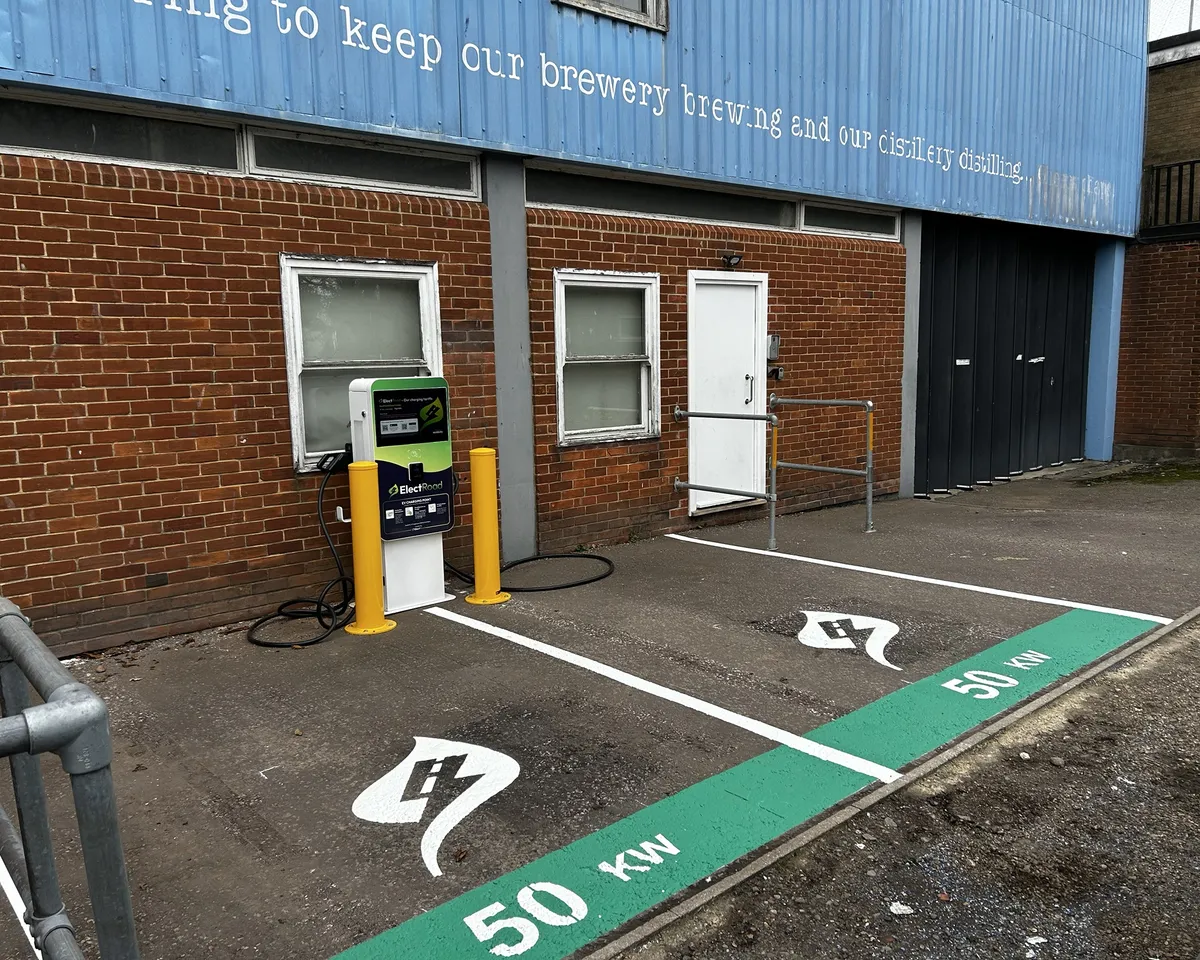
Outdoor option 1
Thermoplastic
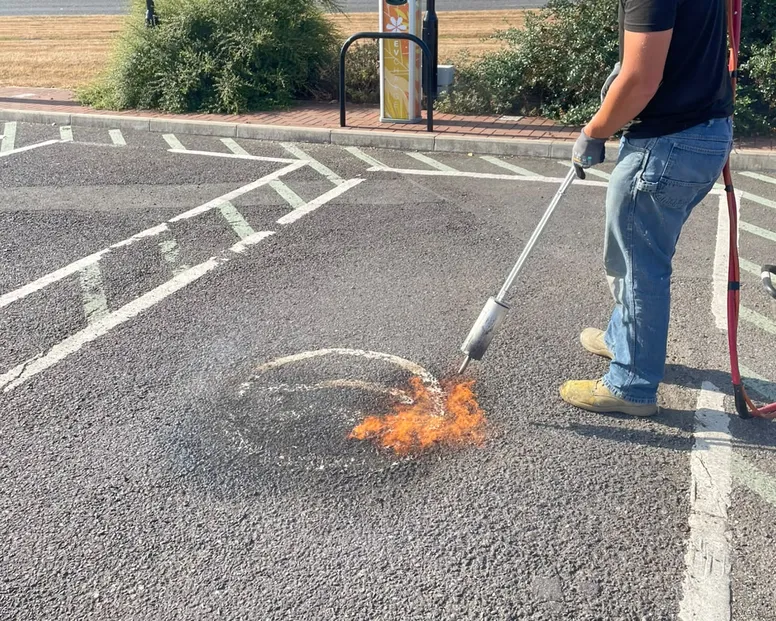
Thermoplastic is heated and applied hot, then sets hard within minutes as it cools. It is thick, tough and reflective.
- Cure time: minutes
- Durability: very good on tarmac
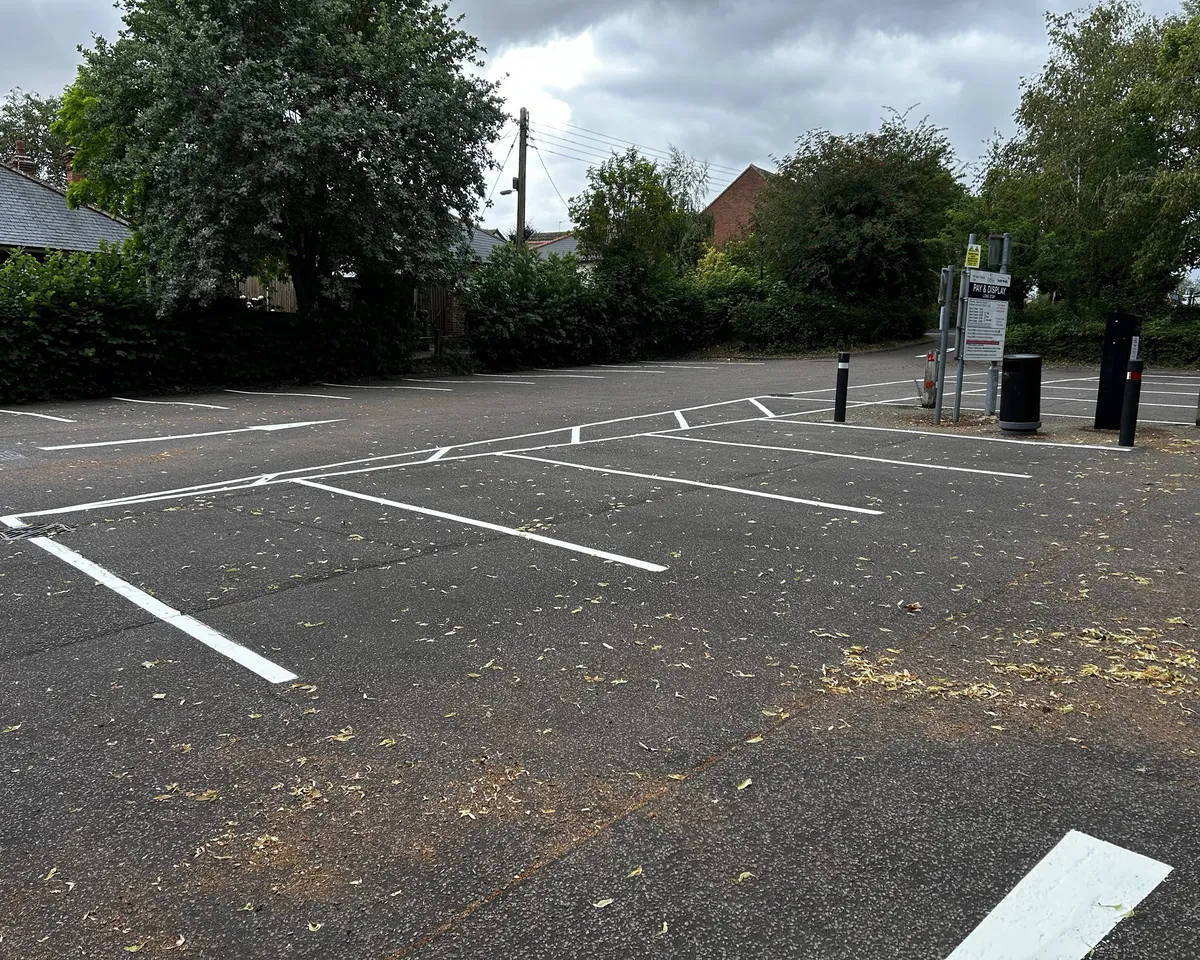
- Best for: car parks, playground graphics and relining sites where the existing markings are already thermoplastic, as new thermoplastic bonds best to old. Read more: what is thermoplastic line marking?
Outdoor option 2
MMA (methyl methacrylate)
MMA is a cold-applied, two-part material and one of the hardest wearing options available. It can be sprayed or hand applied with a screed box for thicker lines and solid areas.
- Cure time: fast, often around 15 minutes
- Durability: excellent. Highly resistant to chemicals, oils and UV
- Visibility: glass beads can be added for better night-time visibility
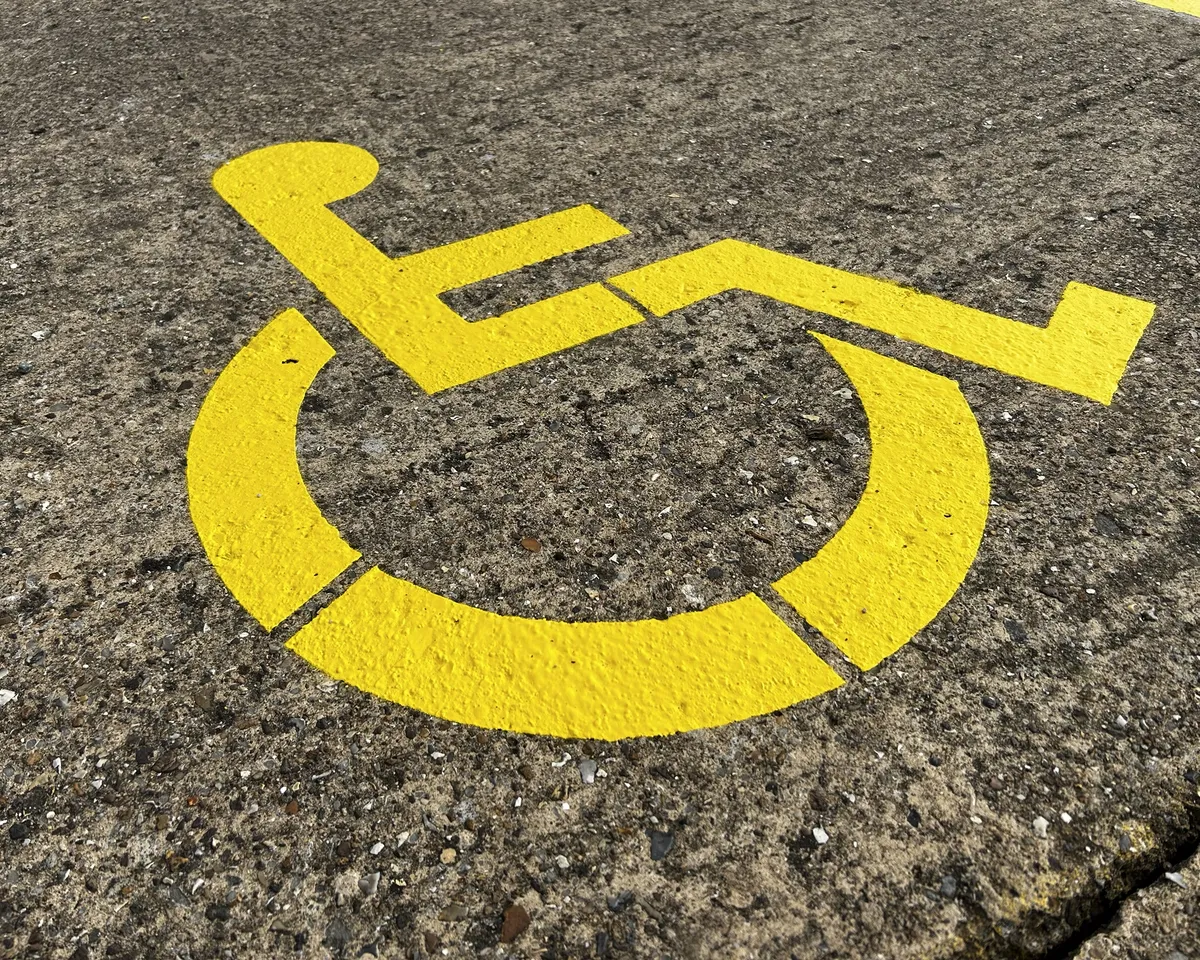
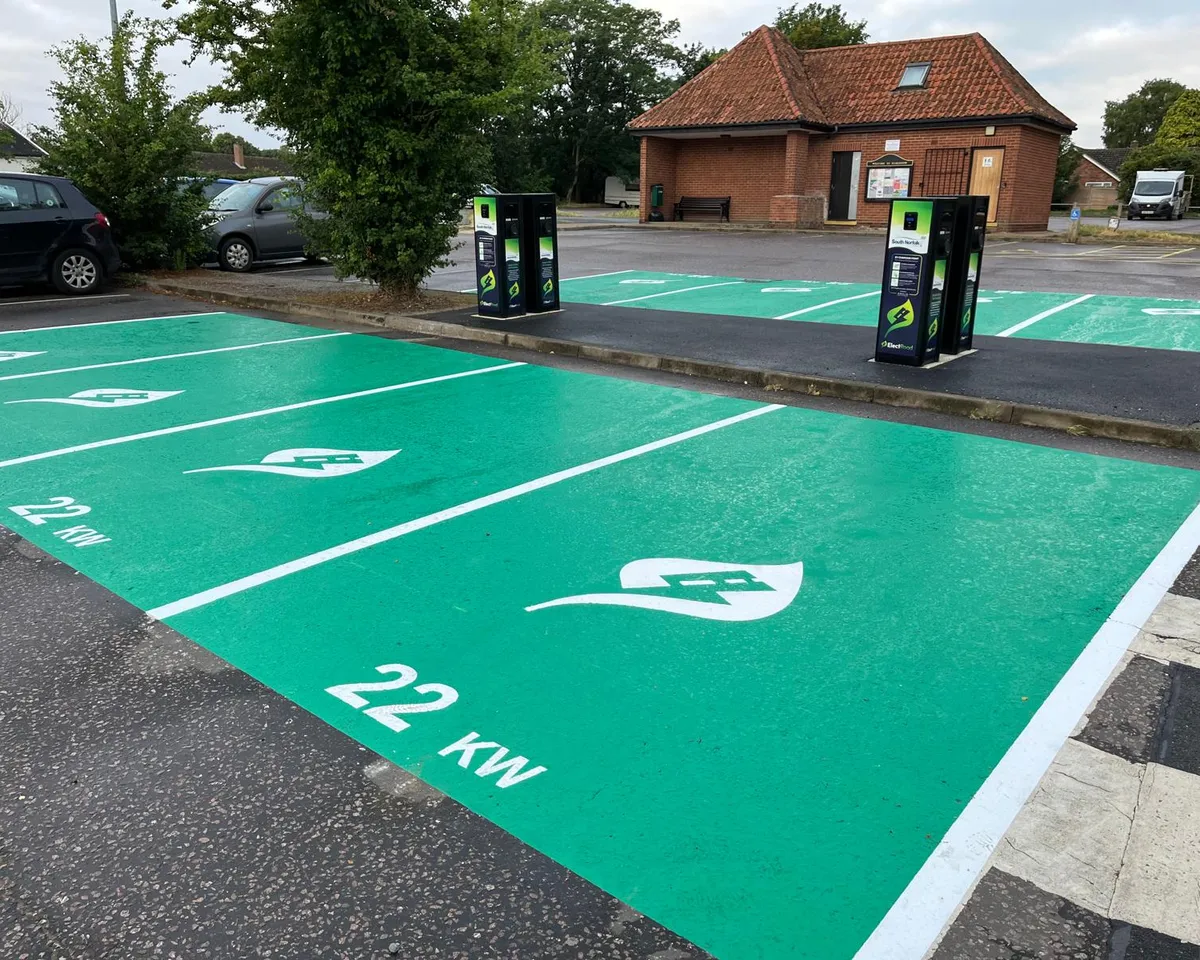
- Best for: high-traffic areas, EV bays, coloured bays and relining over existing thermoplastic
MMA costs more than paint, but it lasts much longer, so you go longer between relines.
Outdoor option 3
Spray-applied acrylic and epoxy paints
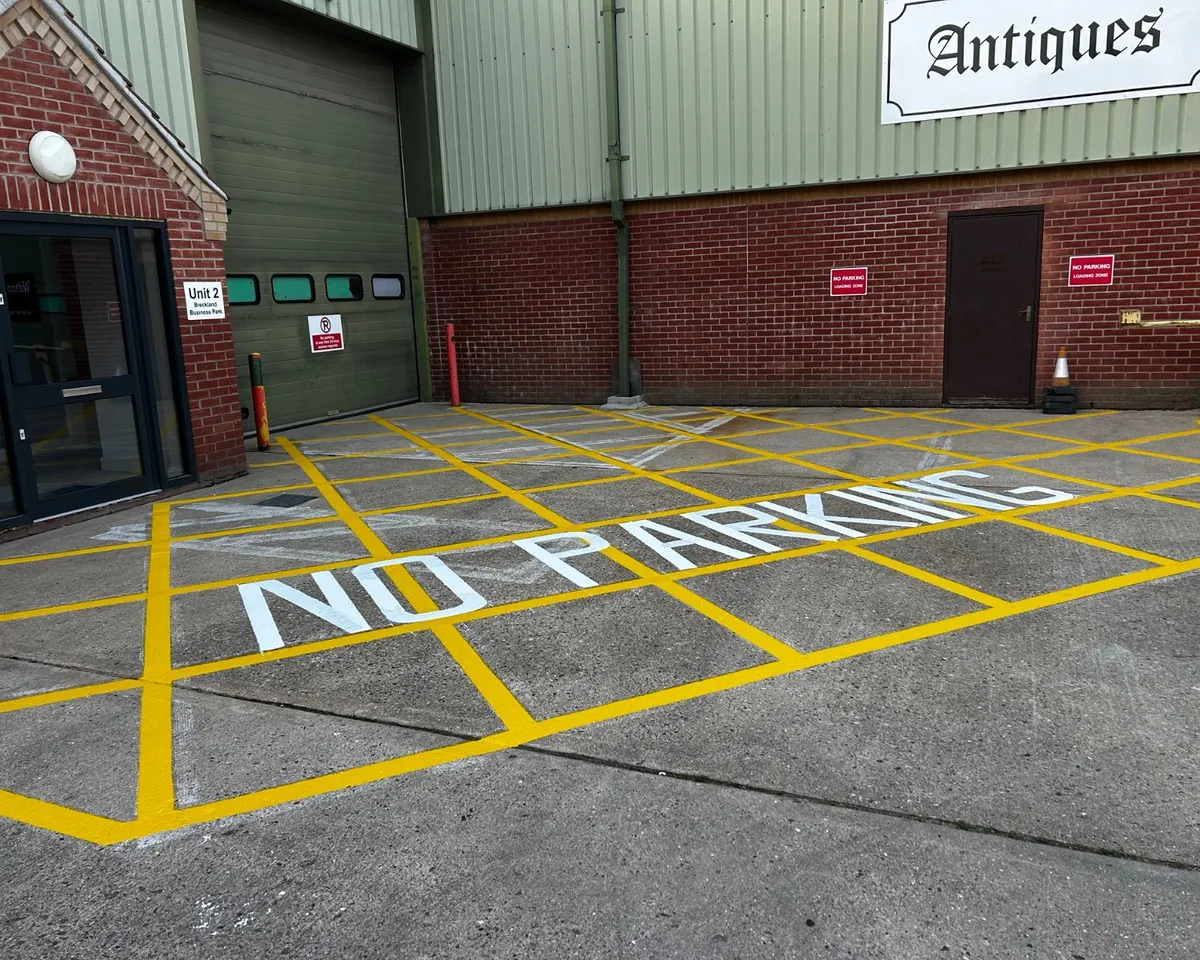
This is our everyday choice for outdoor car parks and yards. It is applied with a laser-assisted airless line marking machine, which gives straight, consistent lines quickly.
- Cure time: usually within about an hour, depending on the weather
- Durability: good. Resistant to chemicals, oils and UV
- Surfaces: tarmac, concrete and block paving. Concrete needs a primer for the best bond
- Best for: car parks, relines and sites where budget matters
Warehouse and industrial floors
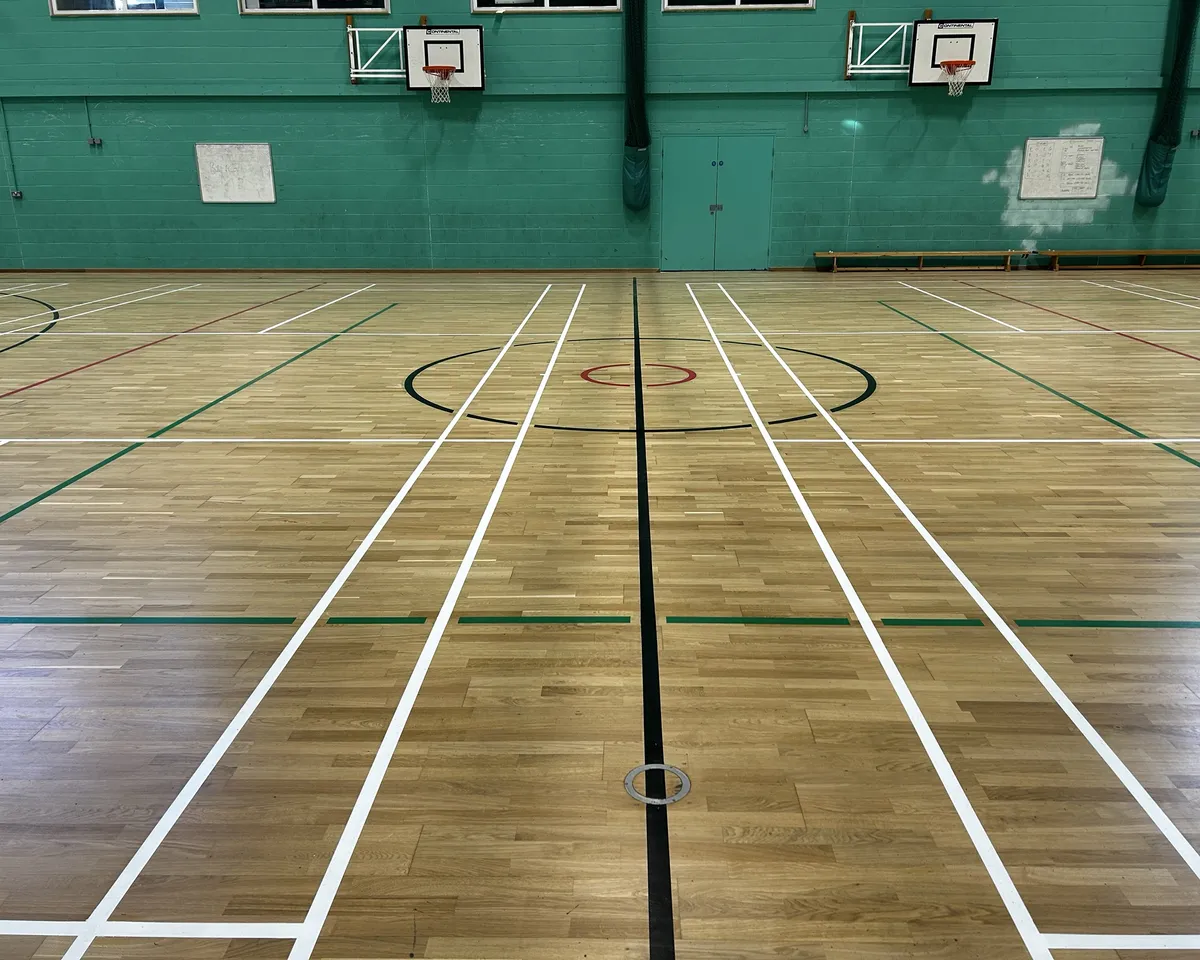
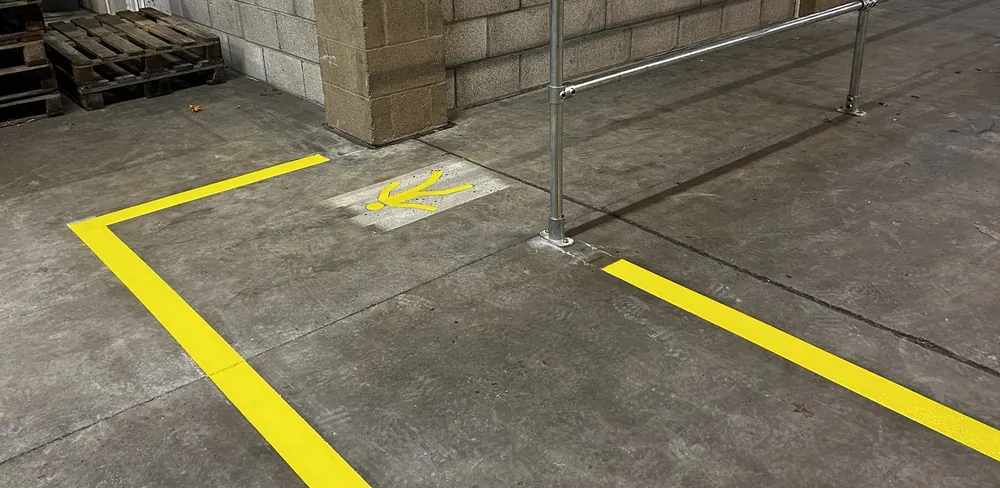
Indoor concrete floors take a different set of systems, and preparation is even more important. We grind or shot blast the floor to clean, keyed concrete, prime it, then apply:
- Single-part acrylic: quick to apply and dry, with minimal disruption
- 2K epoxy: a two-part coating that gives a very strong, chemical-resistant finish for busy floors
- Polyaspartic: cures in hours rather than days and does not yellow in sunlight, so areas are back in use fast
For areas that need to be seen in low light, we can also add a photoluminescent (glow-in-the-dark) topcoat.
Why we rarely use water-based paint
Water-based line marking paints are often sold as the greener option. In our experience they simply do not last as long as the other systems, so they need repainting far more often, and many still contain solvents.
We think the most sustainable marking is the one you do not have to redo every year. That is why we put our effort into preparation and durable materials.
Not sure which material you need?
Tell us about your site and we'll recommend the right one.
Prefer to chat to a member of the team?01603 905 022Frequently asked questions
Which line marking material lasts the longest?
MMA and thermoplastic are the hardest wearing outdoor options. Indoors, 2K epoxy and polyaspartic systems last longest. But any material only lasts as long as its bond, so preparation matters most.
How long until I can drive on new markings?
It depends on the material and the weather. MMA and thermoplastic can often take traffic within minutes to an hour. Spray paints usually need around an hour. Indoor two-part systems can take longer.
Is MMA worth the extra cost?
For busy sites, coloured bays and EV bays, usually yes. It lasts much longer than paint, so you go longer between relines.
Can you match our existing material?
Yes. We'll check what is already down. For example, new thermoplastic bonds best to old thermoplastic.