
Clean, rough concrete that markings can grip
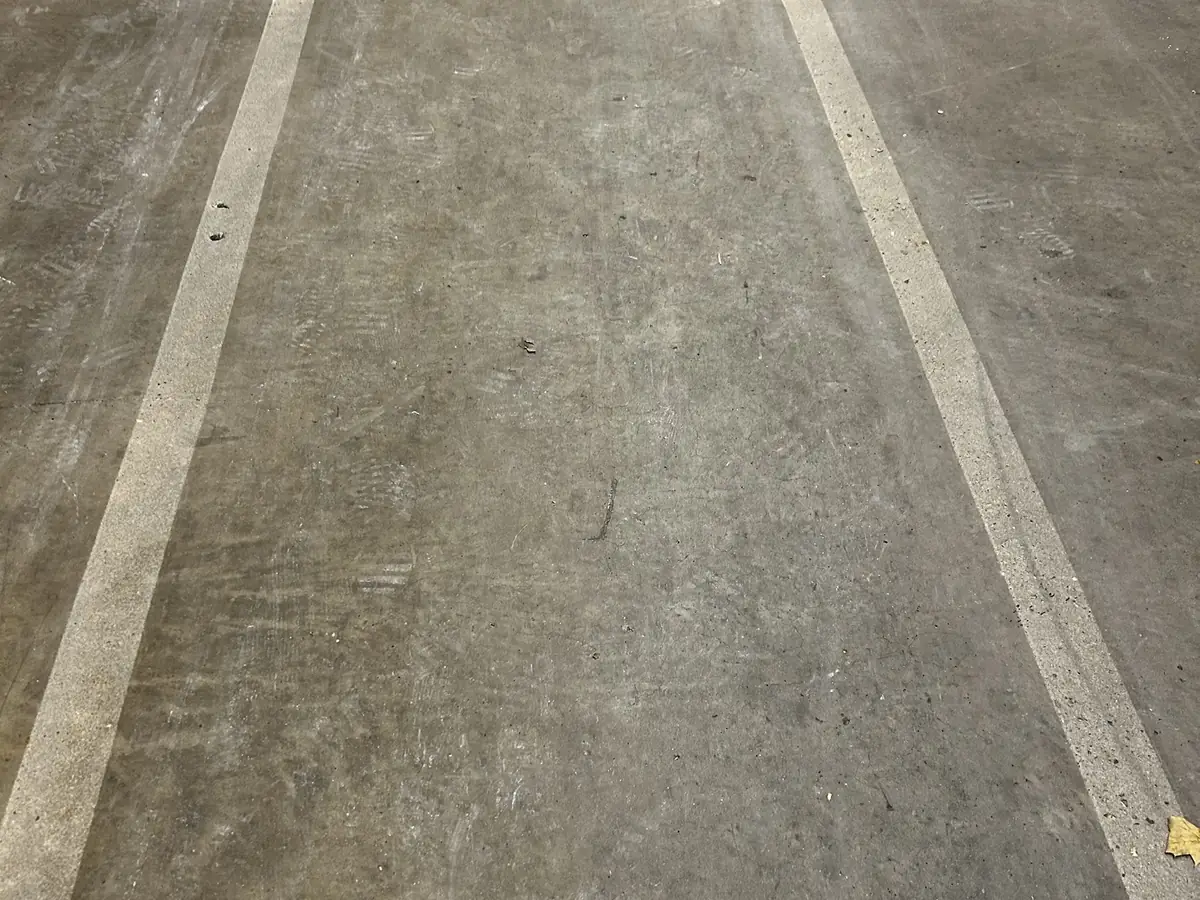
Shot blasting fires small steel balls, called shot, at a concrete floor at high speed. They knock off old paint, dirt, oil and the weak, dusty top skin of the slab, leaving clean, rough concrete that new markings can properly grip.
It all happens inside a sealed head. The shot bounces back into the machine, gets separated from the dust and is fired again, while an industrial vacuum pulls the dust away. So it is a lot cleaner than most people expect.
Shot blasting, step by step
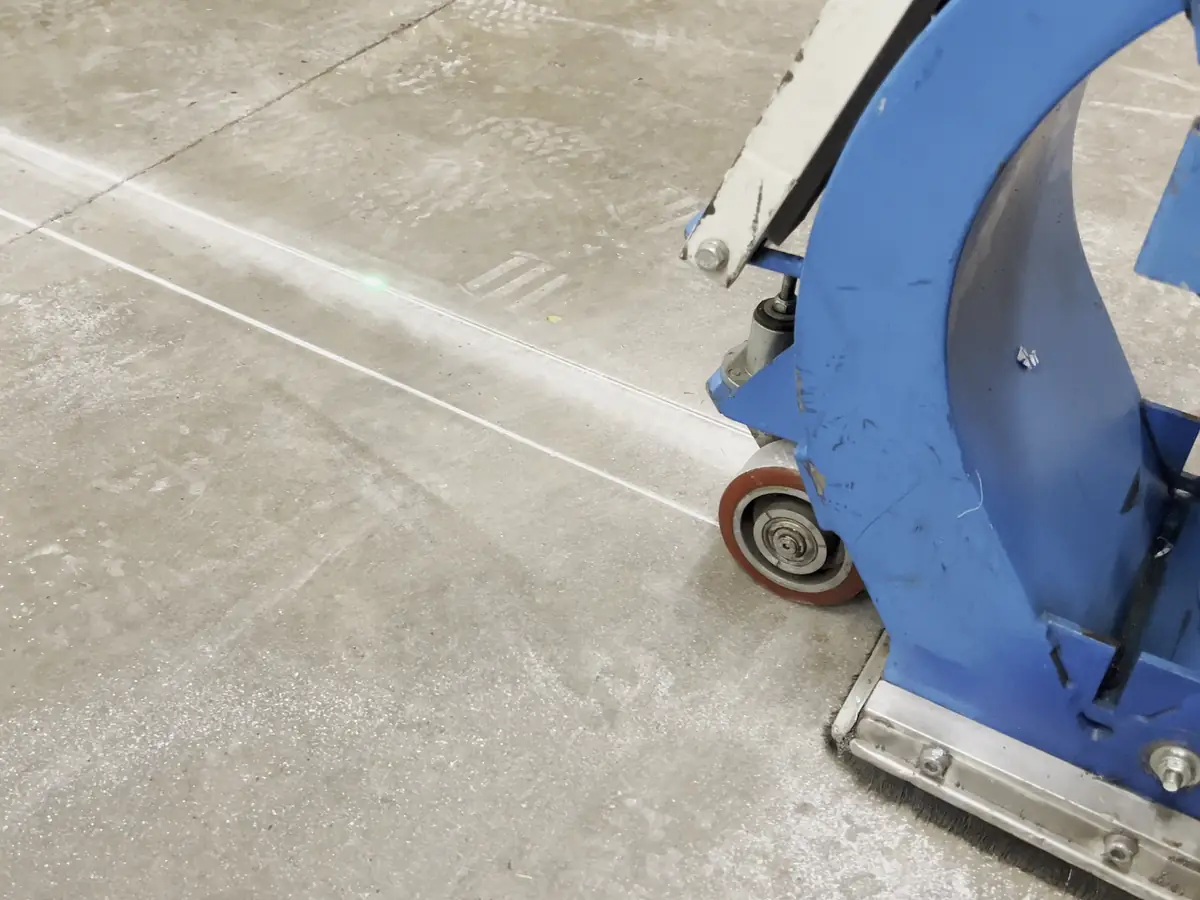
- The blast head sits flat on the floor with brush seals around it, so nothing escapes.
- A spinning wheel inside throws the shot down at the concrete.
- The shot hits the surface, chips off the top layer and bounces back up.
- A separator keeps the good shot for reuse and sends the dust and debris to the vacuum.
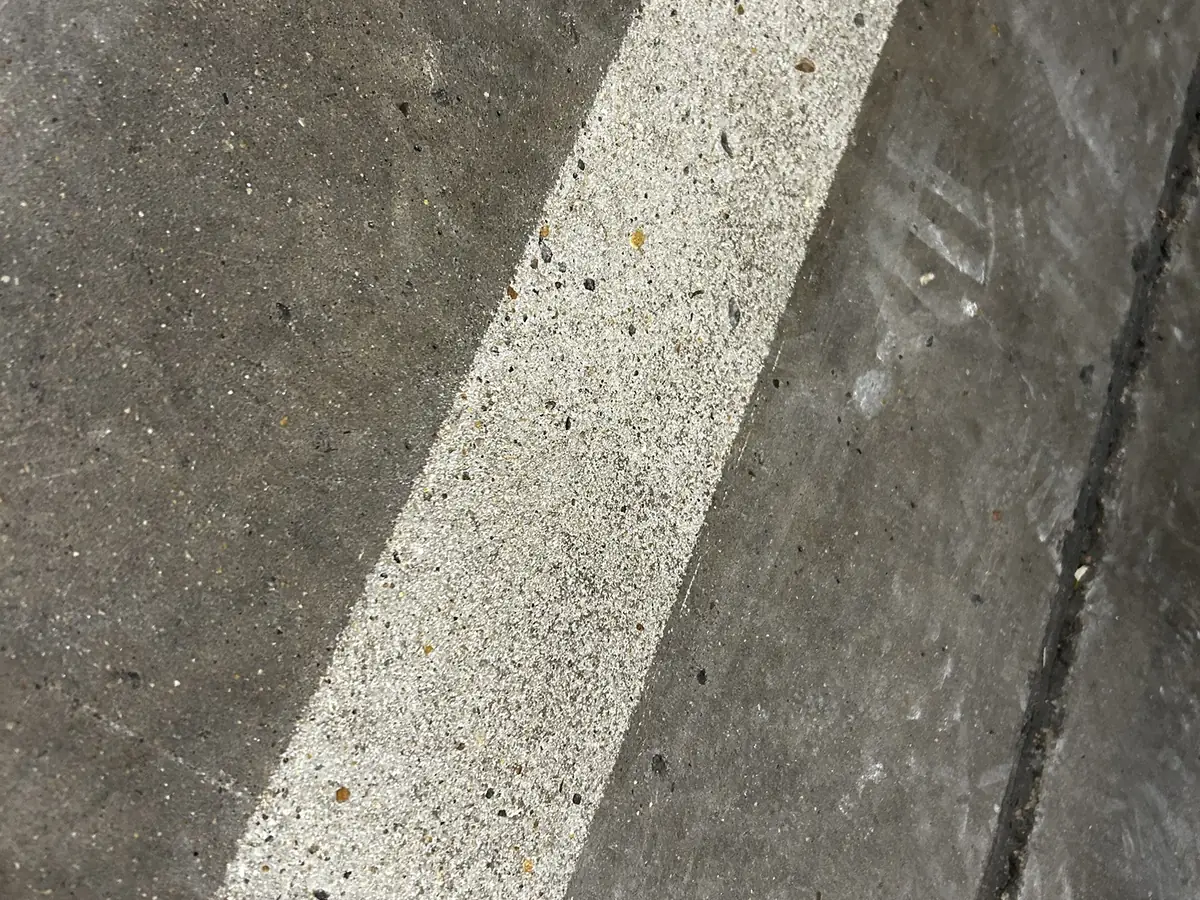
- What is left behind is a clean, open, lightly textured surface.
Why line marking needs it
Paint can't grip smooth or dirty concrete. Shot blasting opens up the surface so the primer and marking bond into the floor instead of sitting on top of it. For the full story on why lines fail without it, see why warehouse floor markings peel.
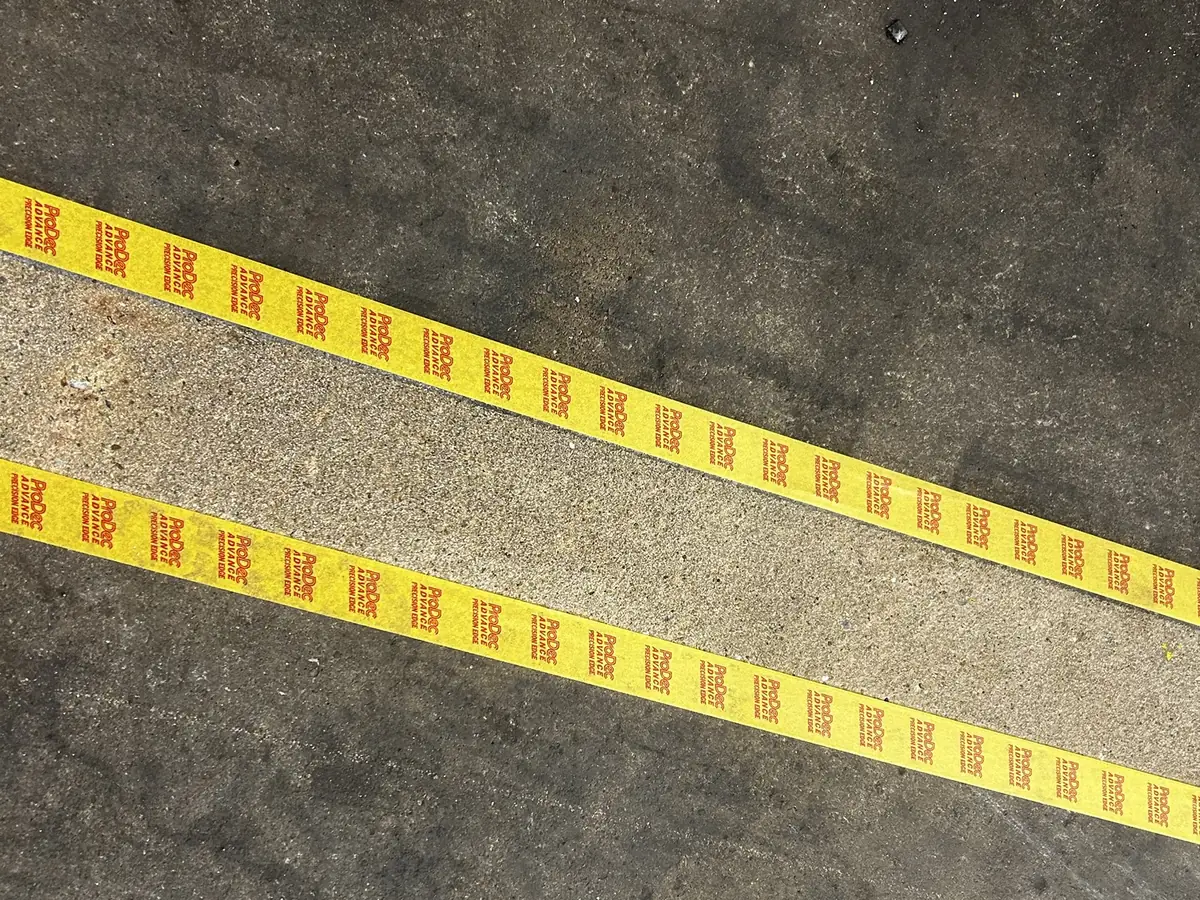
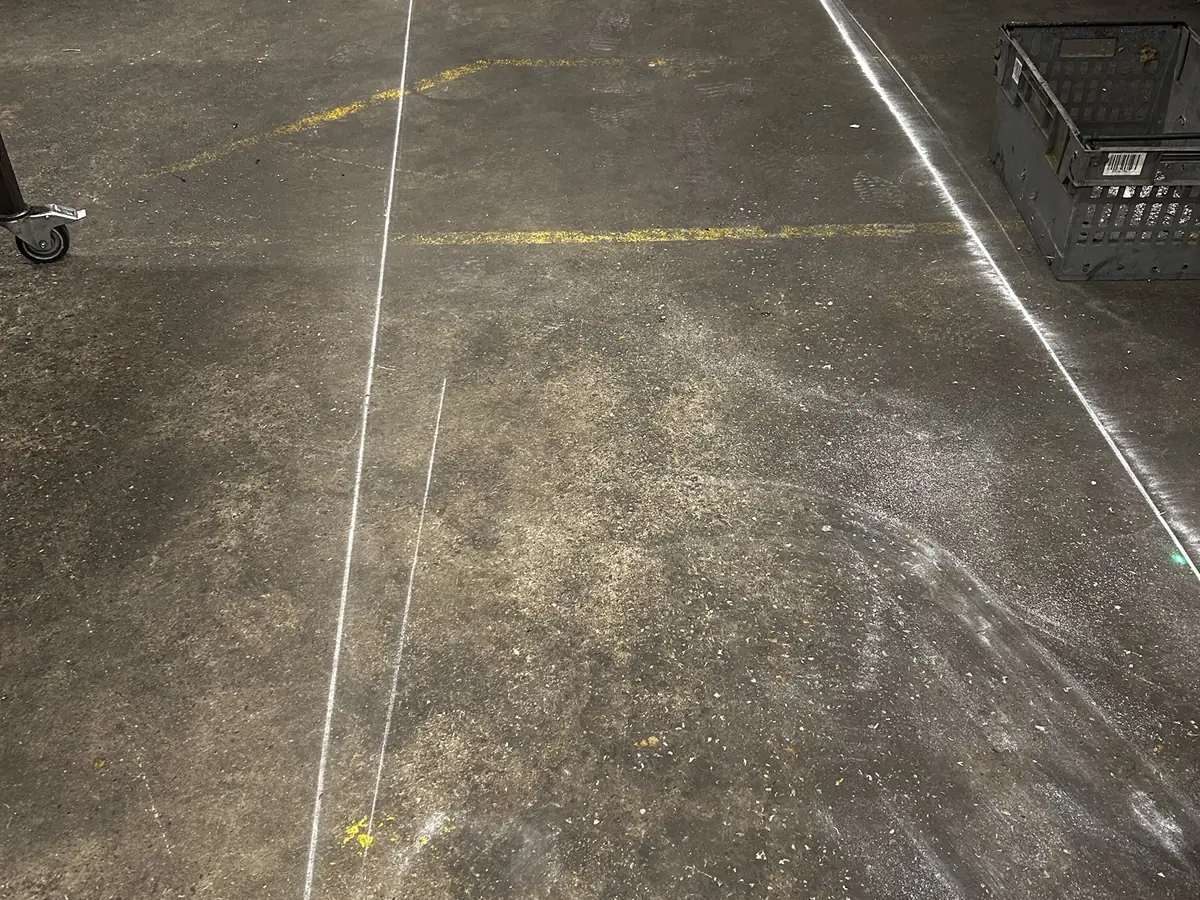
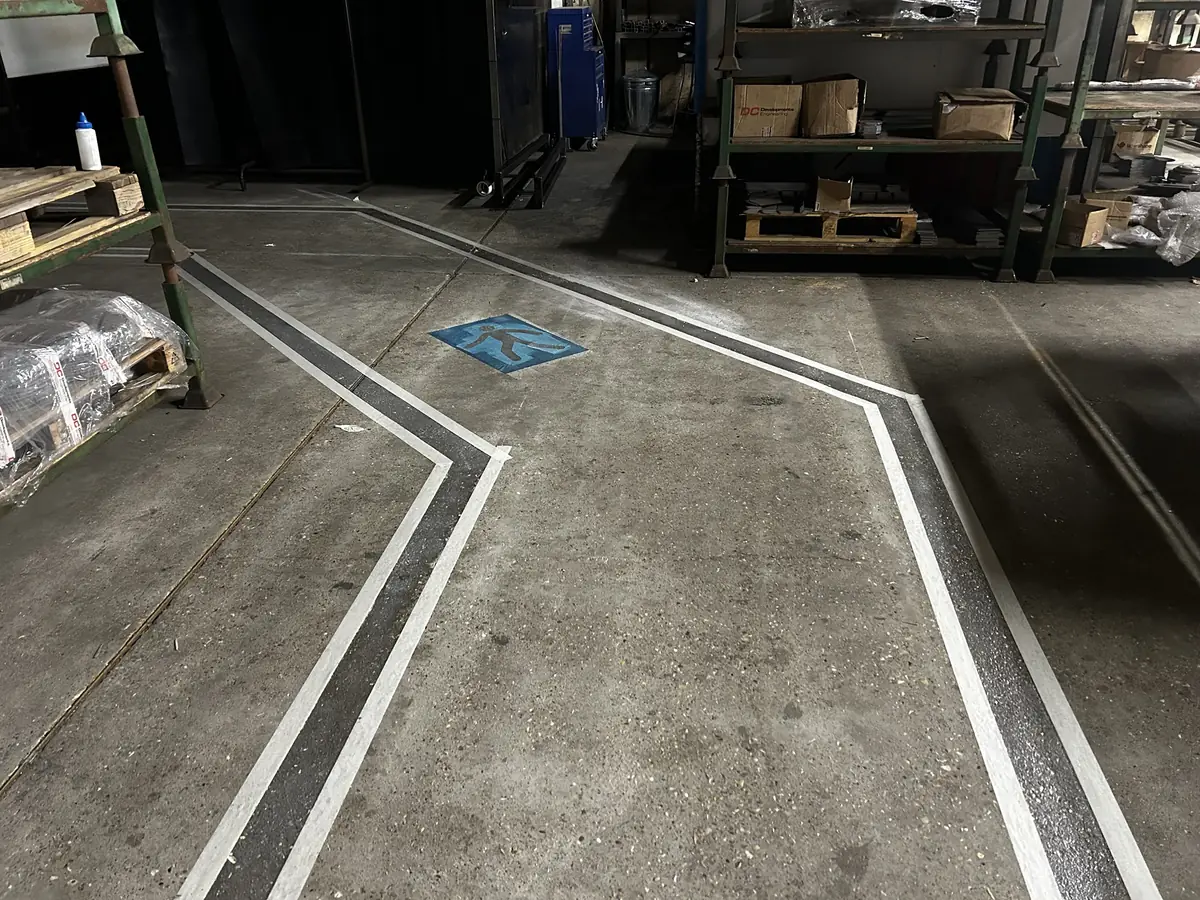
We set out with a laser line and fit shields to the machine, so the blasted band runs dead straight and is the width of the line. The new marking covers it, so you don't end up with a scruffy rough strip either side.
When a floor needs shot blasting
- New floor markings going down on bare concrete
- Old markings coming off for a new layout
- A sealer or old coating on the floor that new lines would otherwise sit on
What to expect on the day
- Dust: very little. The blast head is sealed to the floor and an industrial vacuum pulls the dust away as it works. Concrete dust contains silica, so we never blast without proper extraction.
- Noise: it is loud, like most heavy floor kit. Anyone working nearby needs ear protection, and we fence off the work area. If noise is a problem we can work when the building is quieter.
- Downtime: you don't need to shut the warehouse. We work in zones with barriers and plan the order with you, so main routes are closed for as short a time as possible.
- Power: smaller machines run off a single phase supply, bigger machines need three phase. We check what you have on the site visit.
When it isn't the right tool
- Wet or damp floors: the shot sticks, the machine can't run properly, and markings won't bond to a damp floor anyway.
- Very uneven or soft surfaces: the shot escapes or the floor breaks up.
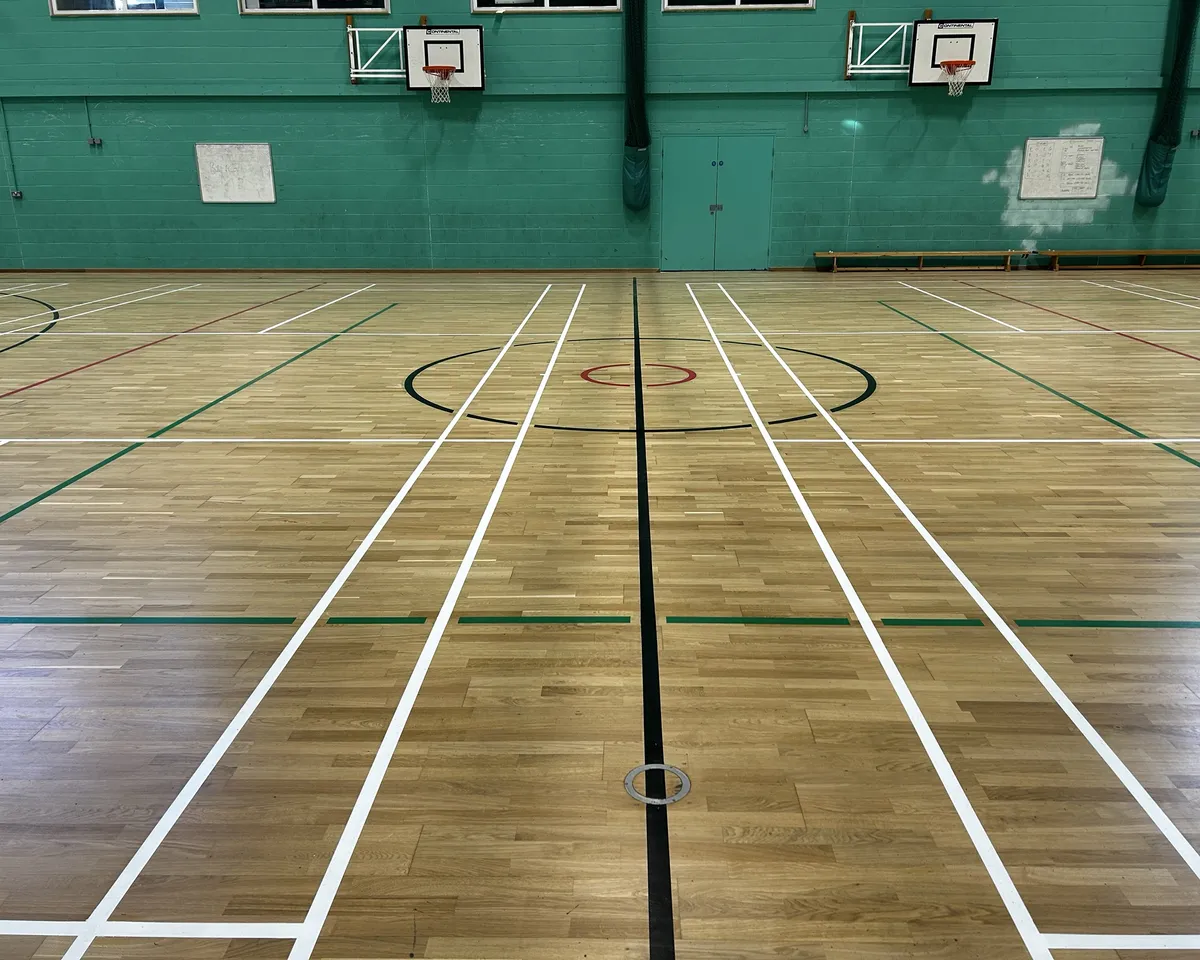
- Timber or vinyl sports floors: these are prepared a different way. See how we mark out a sports hall floor.
- Thick or rubbery coatings: the shot tends to bounce off, so these need grinding first.
Not sure which your floor needs? Read shot blasting vs grinding or our surface preparation guide, or see our warehouse line marking service.
Want markings that last?
Tell us about your site and we'll be in touch.
Prefer to chat to a member of the team?01603 905 022Frequently asked questions
Is shot blasting the same as sandblasting?
No. Sandblasting uses compressed air to spray loose grit everywhere. Shot blasting is enclosed, recycles steel shot and is close to dust free.
Does shot blasting damage the concrete?
No. On a normal prep pass it only takes off the very top skin of the floor. The slab itself is not affected.
Can it be done in a working warehouse?
Yes. We work in zones with barriers and dust extraction, so the rest of the building keeps running.
Do you blast the whole floor?
No. For line marking we only blast the band each line will sit in, so the rest of the floor is left as it is.
Do you shot blast floors on their own?
No. We only shot blast to put down line markings or area markings, so the prep and the marking are done together.
What do you put down after shot blasting?
We often recommend a two part epoxy system. If you are paying for proper surface preparation, a harder wearing material gives you the best return on it.
When can forklifts drive on the floor again?
Cure and traffic times depend on the material we choose for your floor. We tell you before we start so you can plan around it.
How long does shot blasting take?
It depends on how many metres of line there are and how many corners and boxes. We give you a timescale with the quote after seeing the site.
Will it remove the old lines?
Usually, yes. Thick or rubbery coatings sometimes need grinding as well.
What about loose shot left behind?
We run a magnetic sweeper over the area afterwards to pick up any stray shot.
Can you shot blast outside?
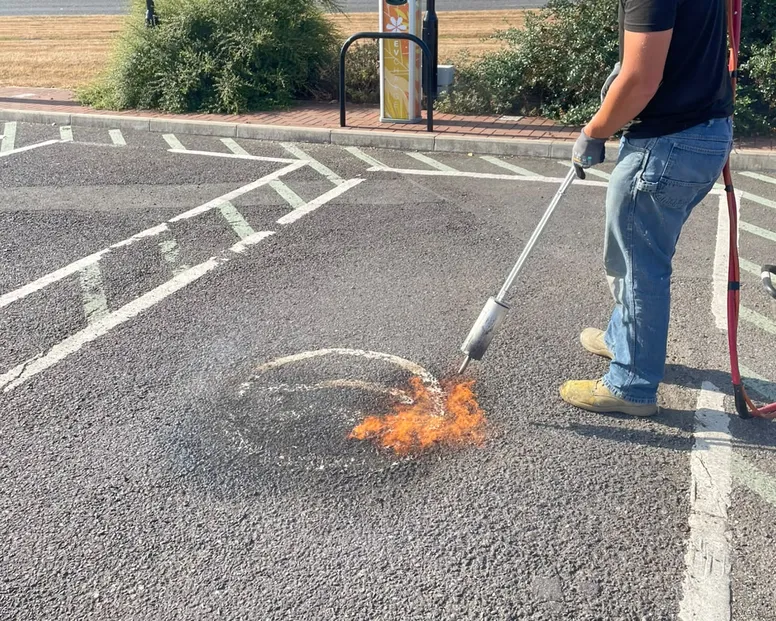
You can, but outside we usually burn off or scarify old lines instead. See our guide on how to remove line marking paint.