


Keep people and vehicles apart, and make the routes obvious
Accidents between vehicles and people on foot are one of the biggest causes of serious injury in warehouses. The Health and Safety Executive (HSE) is clear that the best way to prevent them is to keep pedestrians and vehicles apart.
Barriers and separate routes do that best. Where people and vehicles have to share space, clear floor markings show everyone where to walk, where to drive and where to cross.
This guide is a plain-English summary, not legal advice. Your own risk assessment decides what your site needs.
The regulations and guidance behind floor markings
- Workplace (Health, Safety and Welfare) Regulations 1992, regulation 17: traffic routes must be organised so pedestrians and vehicles can move around safely, and marked where that's needed for safety.
- HSE guidance HSG136, A guide to workplace transport safety: the HSE's main guide, free to download. It covers separating people and vehicles, crossing points, one-way systems and reversing.
- Health and Safety (Safety Signs and Signals) Regulations 1996: set out yellow and black, or red and white, stripes for marking obstacles and dangerous areas.
None of these gives one fixed layout. They expect you to look at how people and vehicles move around your site and mark it to suit. See the HSE's page on separating pedestrians and vehicles.
The markings most warehouses need
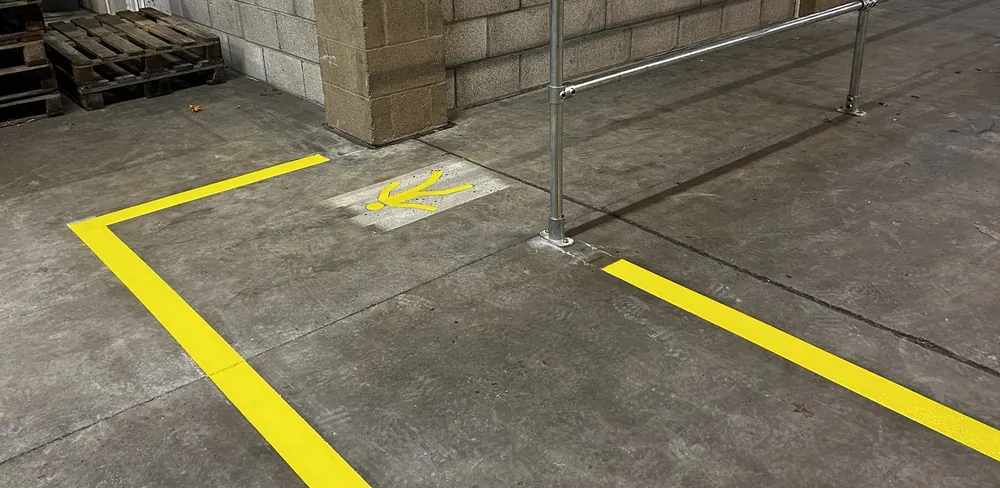
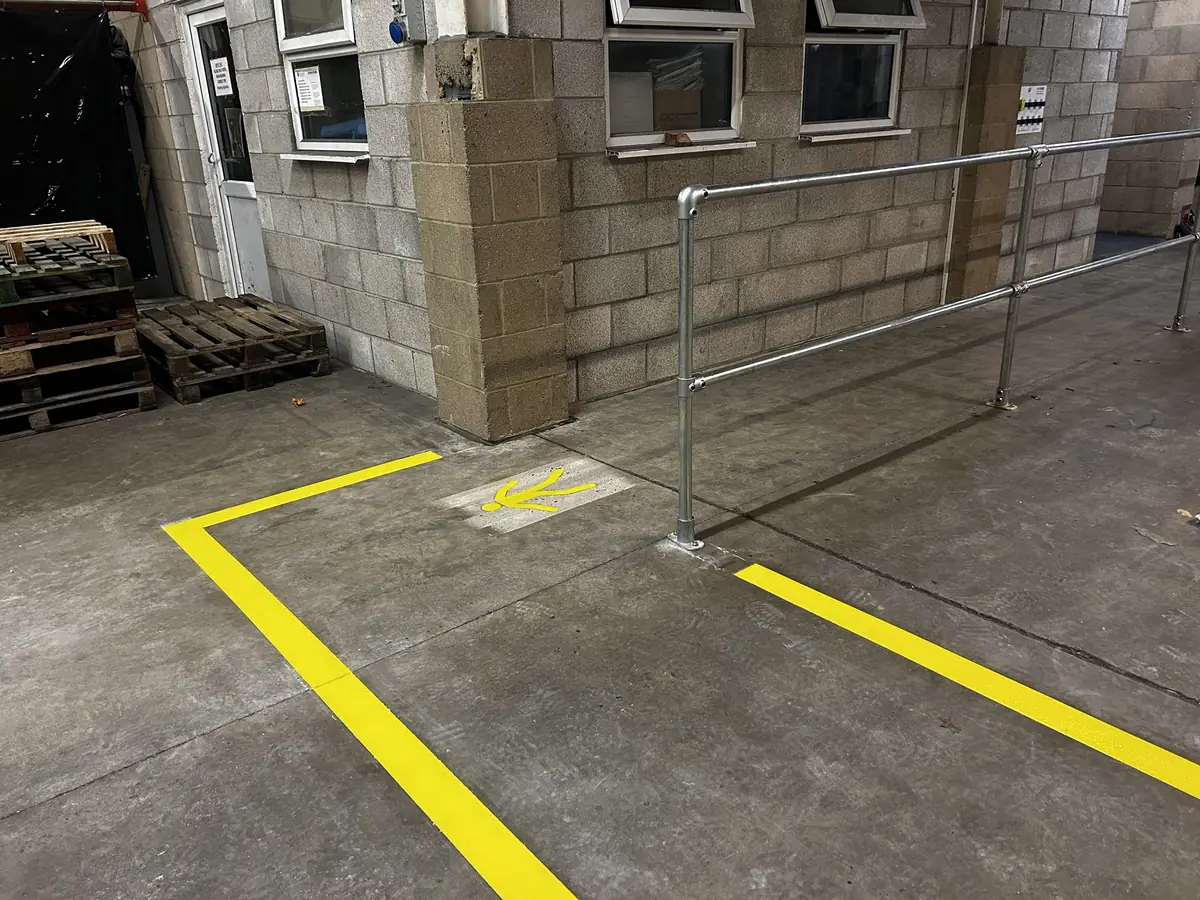
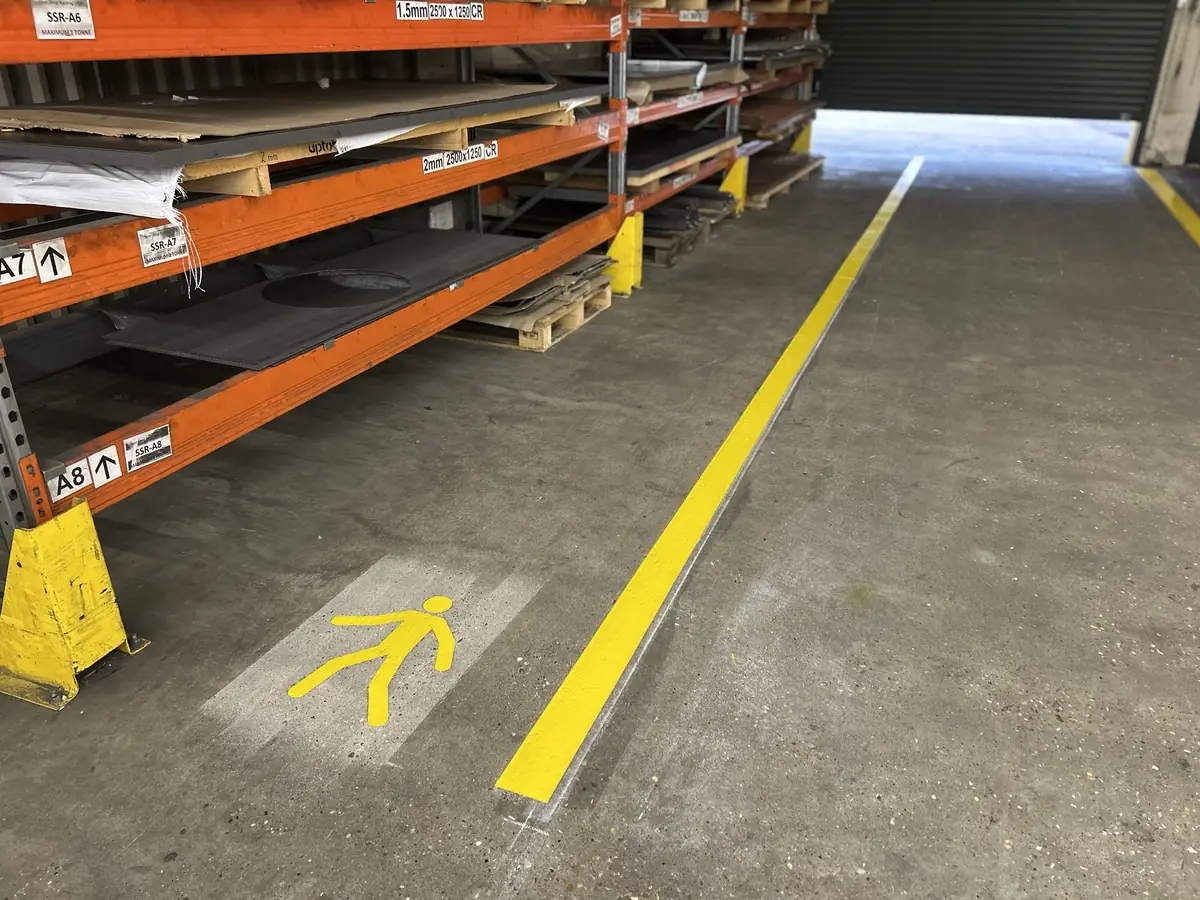
- Pedestrian walkways: clearly edged routes for people on foot, kept away from racking ends and vehicle routes where possible.
- Crossing points: marked where walkways cross vehicle routes, ideally where drivers and pedestrians can see each other.
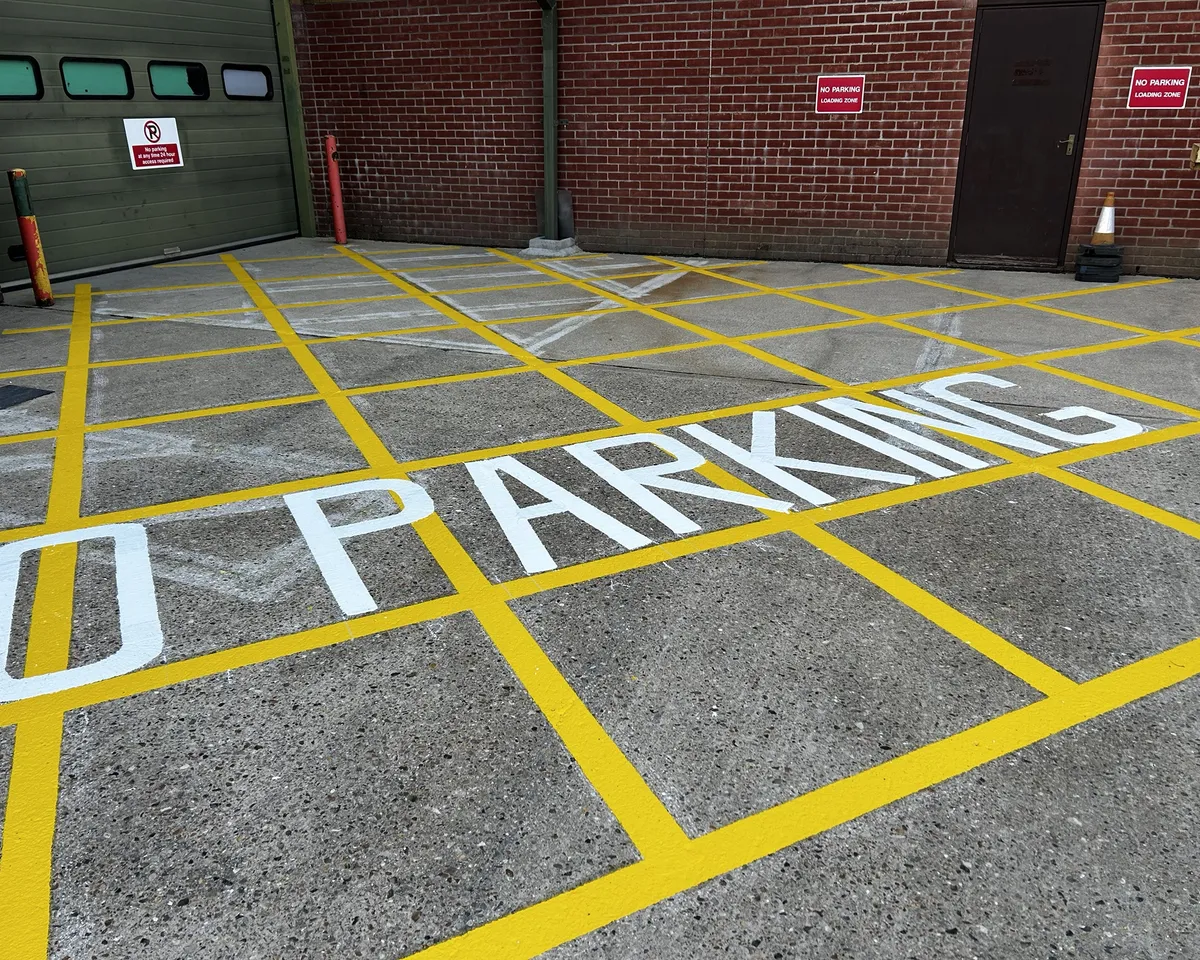
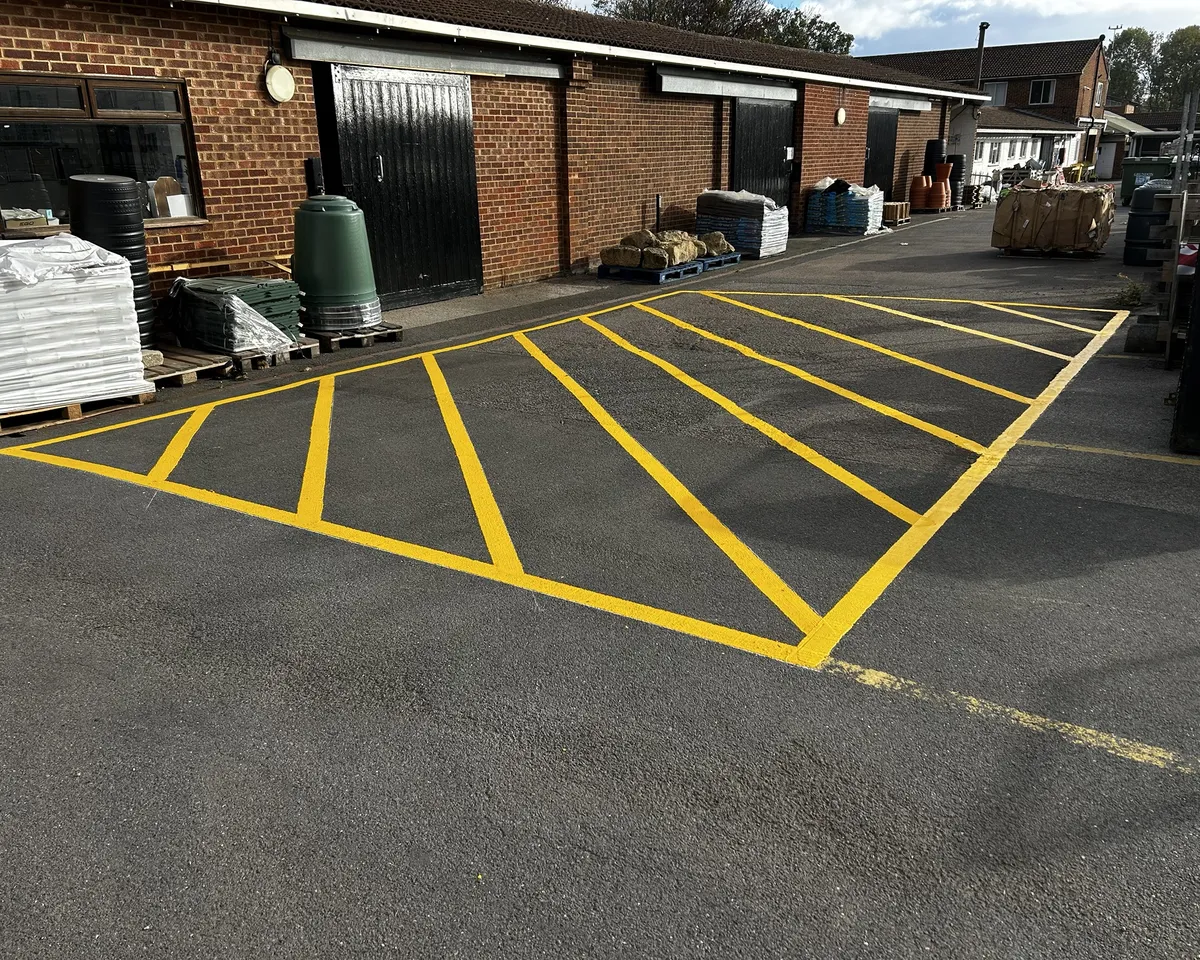
- Doorways: keep-clear hatching outside doors so people don't step straight into a forklift's path.
- Vehicle routes and one-way arrows: fewer reversing manoeuvres means fewer accidents.
- Hazards: striped marking around columns, edges, loading docks and anything a vehicle could hit.
- Storage and keep-clear areas: pallet bays, racking lines and areas that must stay clear, such as fire exits and fire points. See our guide to fire exit floor markings.
Which colours to use
Beyond the hazard stripes, there's no set colour code for warehouse floors. What matters is that you pick a system, use it the same way across the site and make sure staff know what each colour means.
A common approach is yellow or white for walkways and aisles, yellow and black for hazards, red for fire equipment and areas that must stay clear, and green for safe routes and first aid. We'll help you settle on one that suits your site.
Markings that survive forklift traffic
Floor markings only help while people can see them. Paint rolled onto a dusty floor can wear through in weeks under pallet trucks.
We grind or shot blast the concrete back to a clean, keyed surface, prime it, and apply a hard-wearing system such as two-part epoxy or polyaspartic. See our warehouse line marking service, or which line marking material to choose.
Need your walkways marked?
Tell us about your site and we'll be in touch.
Prefer to chat to a member of the team?01603 905 022Frequently asked questions
Is it a legal requirement to mark warehouse walkways?
There's no rule that says every warehouse must have painted walkways. But you must organise traffic routes so people and vehicles can move safely, and clear floor markings are the usual way to do that where routes are shared.
How wide should a pedestrian walkway be?
It depends on how many people use it and what they carry. Base it on your risk assessment and the HSE's HSG136 guidance, and leave room for people to pass each other.
Can you mark the floor while we're working?
Yes. We can work in sections, evenings, nights or weekends, so the warehouse keeps running.
How long do warehouse floor markings last?
It depends on the traffic and the system used. Markings on a properly prepared floor last far longer than paint on a dusty one.