


Why getting disabled bays right matters
A disabled bay is not just a normal bay with a wheelchair symbol painted in it. The extra space around the bay is what lets a disabled driver or passenger get in and out of the car safely, use a wheelchair, or reach the boot.
Get the layout wrong and the bay looks compliant but does not actually work for the people it is meant for. This guide covers the sizes and layouts that are commonly recommended in the UK.
It's general guidance, not legal advice. Always check your planning conditions and your local authority's parking standards before finalising a layout.
Standard disabled bay sizes
The most widely used guidance, from BS 8300 and the Department for Transport's Inclusive Mobility guide, recommends:
- The bay: at least 4.8m long and 2.4m wide, the same as a standard bay.
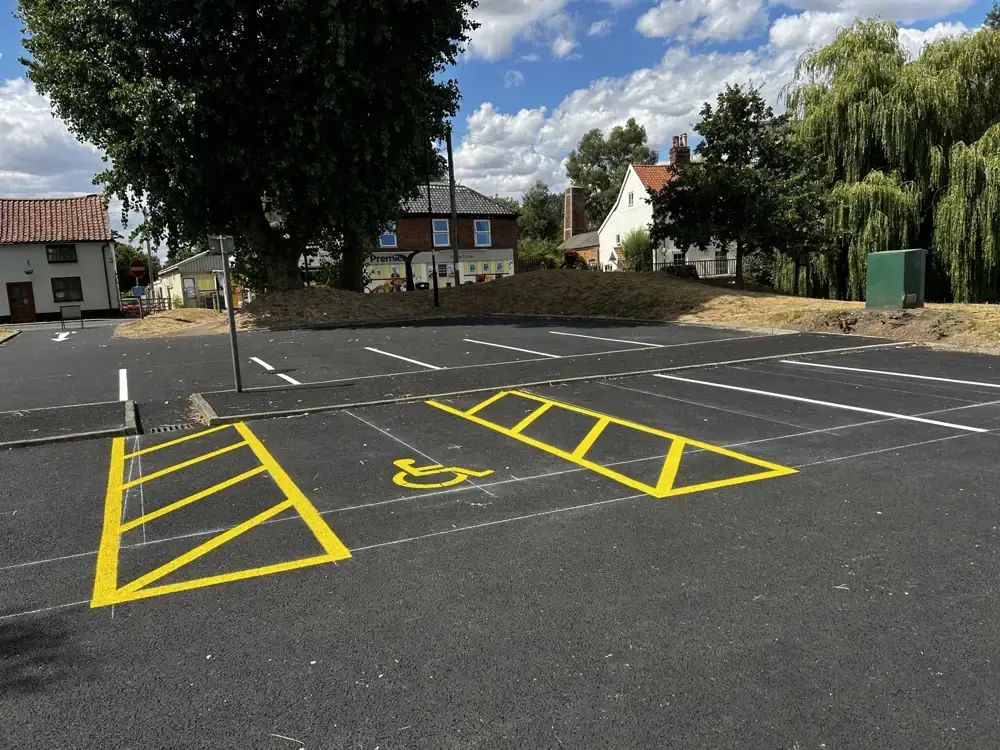
- Side access zone: an extra 1.2m wide hatched zone alongside the bay, so doors can open fully. Two disabled bays can share one zone between them.
- Rear zone: a 1.2m zone at the back of the bay, outside the traffic route, for boot access and rear hoists.
- Parallel bays: where bays run alongside the kerb or aisle, a wider side zone of at least 1.8m is recommended.
How many disabled bays do you need?
There is no single legal number for private car parks. BS 8300 recommends a minimum number of accessible bays based on the type of building and the size of the car park, and many planning permissions set their own figure.
If your car park was built under a planning permission, check its conditions first. If you are unsure, we can help you work out a sensible number when we survey the site.
Where to put them
- As close as possible to the main entrance
- On level ground, with a level or dropped-kerb route to the building
- Where drivers will see them easily as they arrive
- Away from steep slopes, drains and kerbs that make wheelchair use difficult
How they should be marked
- A clear bay outline, usually in yellow or white
- Hatched access zones so other drivers do not park in them
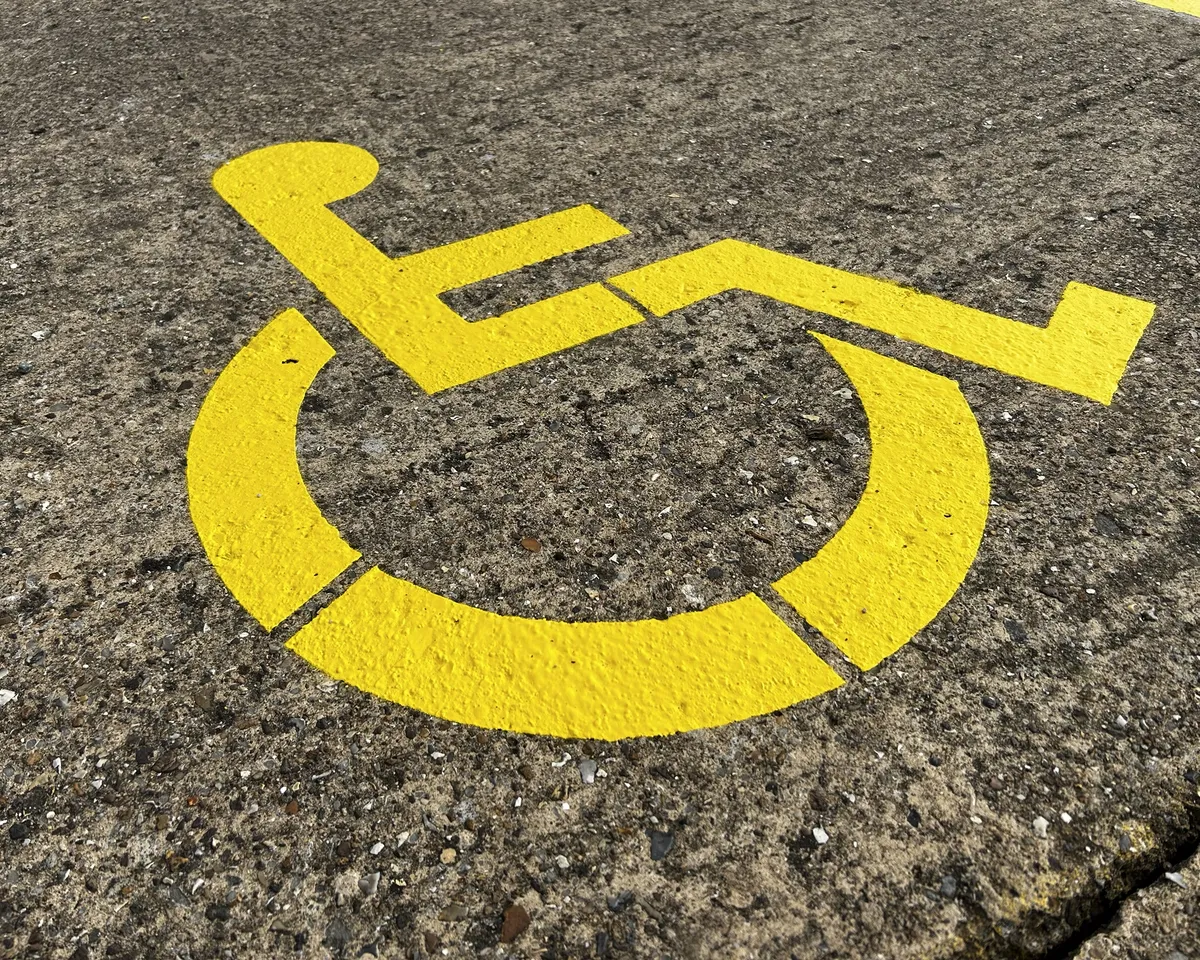
- A large wheelchair symbol in the bay, and a sign at the head of the bay
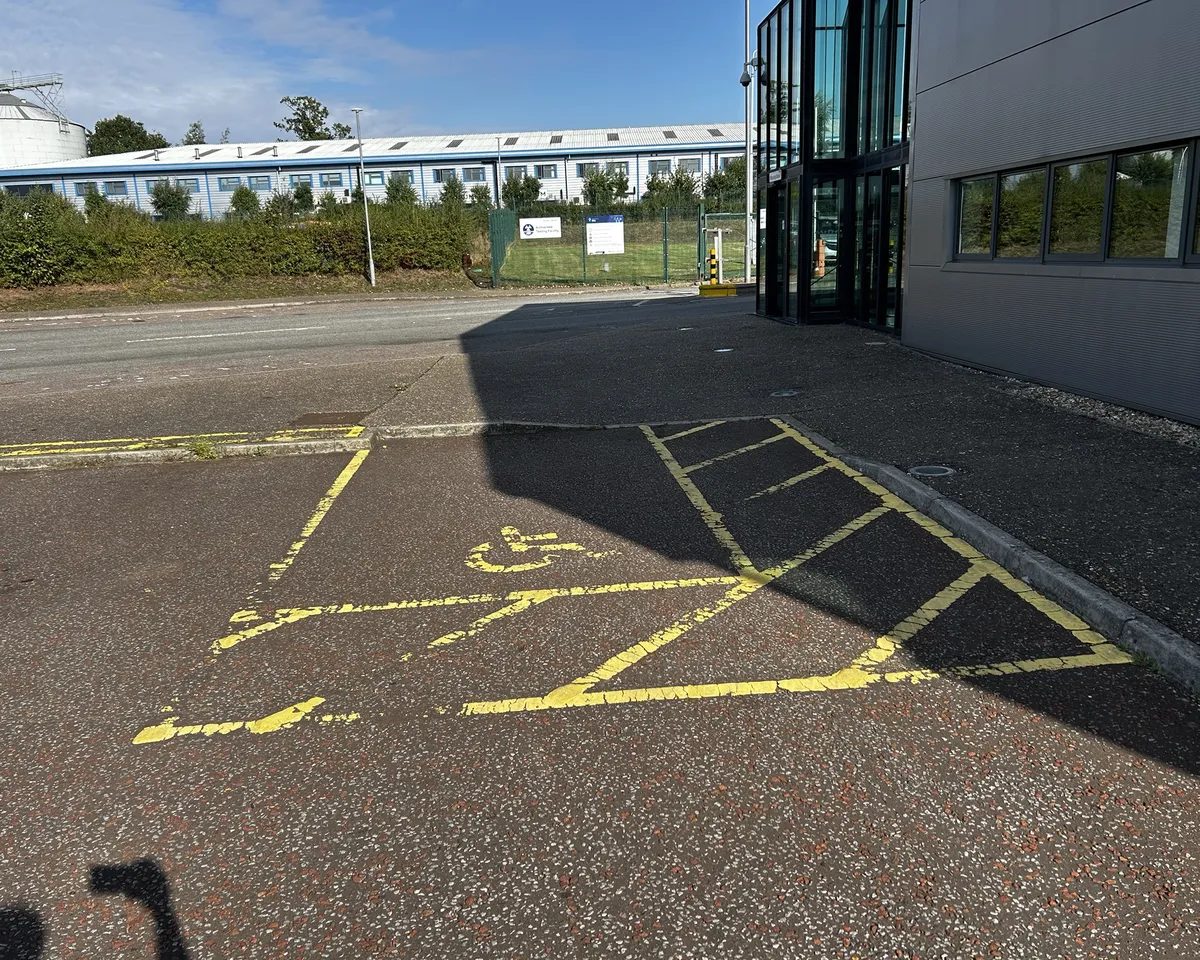
- Markings in a hard-wearing material, as faded symbols are easy to ignore
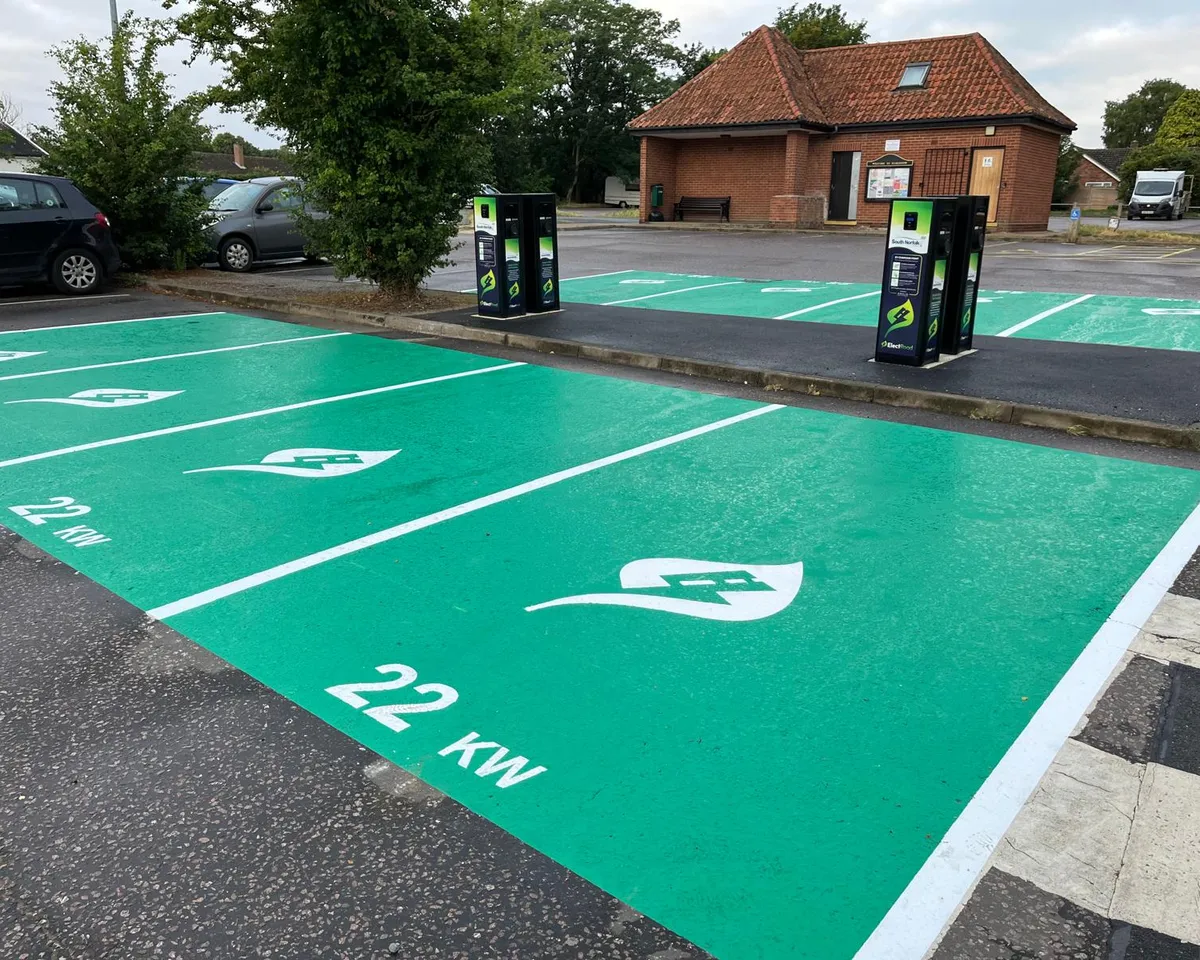
Coloured bays are optional, but they make bays stand out and help stop misuse.
Common mistakes we see
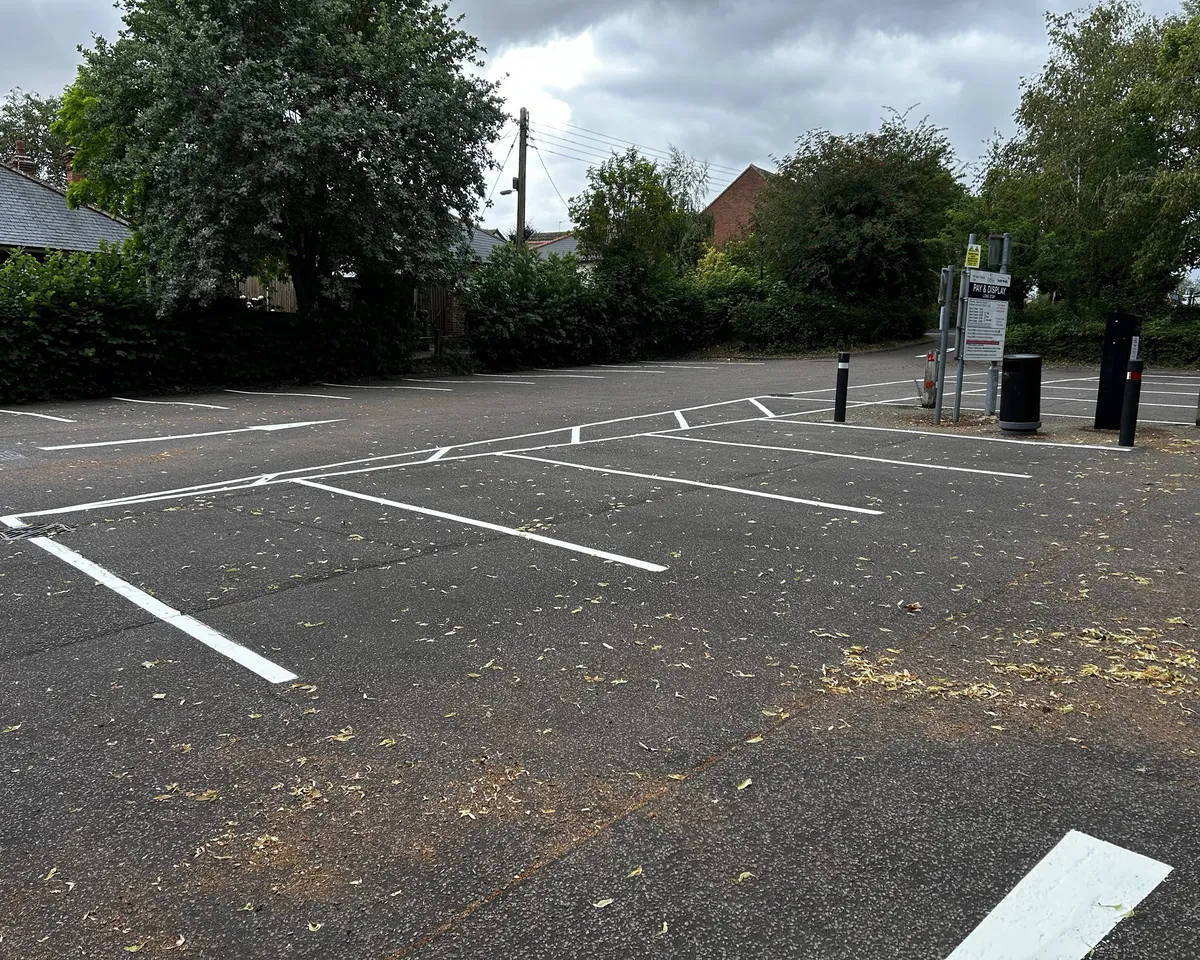
- Standard-width bays with just a symbol painted in them
- Missing or faded hatched access zones
- Disabled bays at the far end of the car park
- Old bay lines left showing after a layout change, confusing drivers
Adding proper disabled bays to an existing car park usually means reworking part of the layout, which can mean losing a standard bay or two. We can remove the old lines and set out the new layout in one visit. See our disabled parking bay service, or get in touch for a free estimate.
Planning accessible bays?
Tell us about your car park and we'll be in touch.
Prefer to chat to a member of the team?01603 905 022Frequently asked questions
How big is a disabled parking bay?
Commonly recommended guidance is a bay at least 4.8m by 2.4m, with an extra 1.2m hatched access zone at the side and a 1.2m zone at the rear.
Is it a legal requirement to have disabled bays?
Requirements vary. Planning permissions often set a number, and the Equality Act expects service providers to make reasonable adjustments for disabled people. Check your planning conditions or ask your local authority.
Can two disabled bays share an access zone?
Yes. A 1.2m zone between two disabled bays can serve both.
Can you add disabled bays to our existing car park?
Yes. We can remove the old lines, rework part of the layout and mark the new bays, usually in a single visit.